

Quick Summary
The Moodi Female Founder Fund has named its 2026 recipients: four women across Australia and New Zealand sharing $15,000 in no-equity, no-repayment grants, alongside mentorship from founder Kate Gatfield-Jeffries.
The Moodi Female Founder Fund has named its four recipients for 2026, backing ambitious women building businesses that make a real difference in the world.
The fund gives early-stage women founders direct cash support and mentorship without taking equity or asking for repayment.
It was created by Kate Gatfield-Jeffries, who founded the New Zealand wellness brand Moodi in 2022 and built it without loans or external capital.
This year’s grants went to a financial literacy platform, a textile recycling service, a tool for unpaid carers, and a pelvic health app.
Why Kate Gatfield-Jeffries Created The Fund
The 2026 round totalled $15,000, split four ways. $8,000 to the first-place recipient, $2,500 each to two second-place recipients, and $2,000 to a People’s Choice winner voted for by the Moodi community via their socials.

She founded Moodi in 2022 while finishing a law and commerce degree at the University of Auckland. The brand now has more than 100,000 customers.
Its Pre + Probiotic Soda sells in more than 500 New Zealand supermarkets, according to Kate’s Forbes 30 Under 30 Asia profile, and she was named New Zealand’s EY Young Entrepreneur of the Year in 2025.
Though there is brand success now, none of that made the first two gruelling years of business easier.
Kate created the fund in response to how hard thoes years were, an experience she has been open with across her platforms.

“Starting Moodi was incredibly rewarding, but it was also financially and emotionally tough,” she shares, as reported by Women’s Agenda. “I didn’t pay myself for the first two years, and there were so many moments where a small amount of support would have changed everything. This fund exists to be that support for someone else.”
She has also spoken about what that kind of no-strings-attached backing did for her early on, after winning $6,000 in a pitch competition in Moodi’s first year.

The money helped, but so did the fact that someone had chosen to bet on the business.
“‘No strings’ funding is what I wish someone had handed me at twenty-four,” Kate said. “Every other form of early-stage funding costs you something – equity, interest, time, control. Women founders are constantly asked to justify, prove, defend, and explain. This fund is a vote of confidence that says: we already believe in you, here is how we show it.”
What Kate Noticed Reading The Applications
Kate personally reviews every submission, as she did in the pilot year.
“Picking winners for the Moodi Female Founder Fund was SO hard. I’m struck by how many women aren’t building a business for themselves,” Kate wrote while announcing the recipients on LinkedIn.
“Almost every applicant had a broader purpose – solving a problem for someone close to them, creating a solution for an underserved community, or wanting a greater impact on the planet. It reinforces something I’ve seen again and again: if you help a woman, you often help a village.”
Read: Female Startup Club Launches Exclusive Private Network for Women in Business
Meet The 2026 Moodi Female Founder Fund Recipients
Te Kahukura Boynton, Māori Millionaire
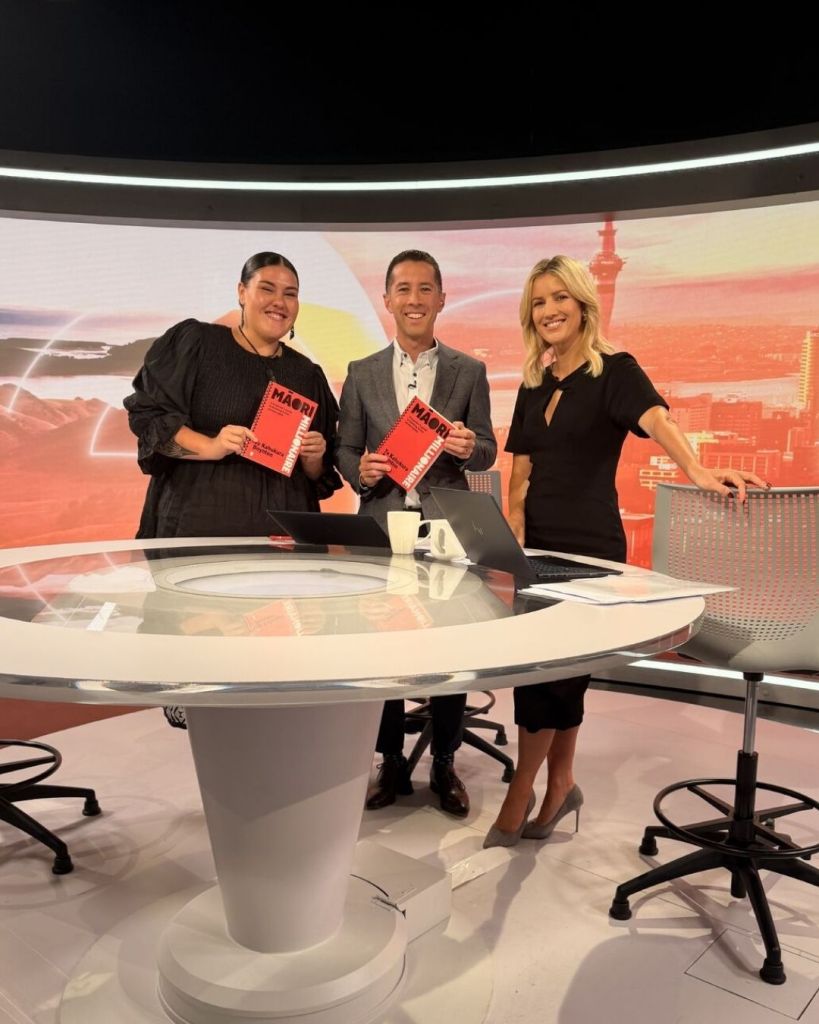
Te Kahukura Boynton took out the $8,000 first-place grant for Māori Millionaire, the financial literacy platform she started at 18 and has since grown into a book, a podcast, and one of the most recognised money voices in Aotearoa.
Her community now runs past 60,000 members, and both RNZ and Stuff have covered her work.
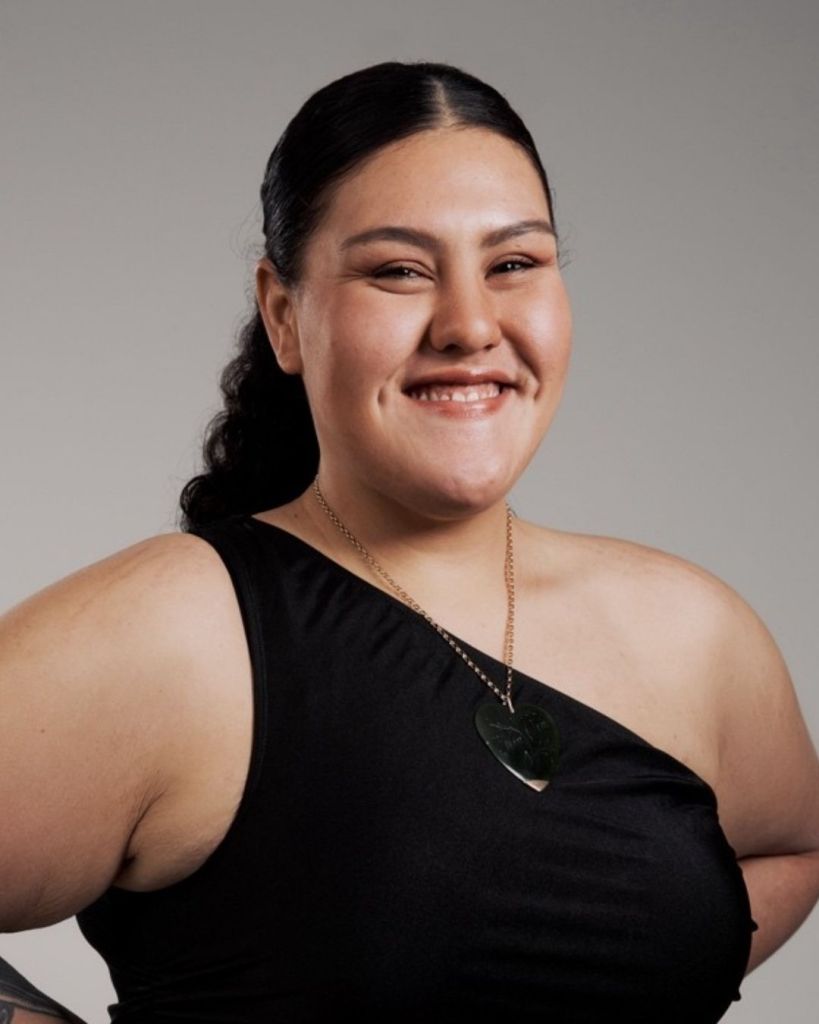
Her approach is trauma-informed, which in practice means she treats money habits as something not seperate from history or access, respecting the importance of family and culture in decisions around money.
As she put it to Stuff, you “cannot financial literacy your way out of survival mode”.
She writes about all of this in Māori Millionaire: A Beginner’s Guide to Building Better Money Habits, published by Penguin in June 2025.
The grant is helping her attend an Indigenous wealth conference overseas and bring what she learns back to the communities she works with.
Where To Find Te Kahukura And Māori Millionaire
- Website: maorimillionaire.com
- LinkedIn: Te Kahukura Boynton
- Instagram: @maorimillionaire_
- TikTok: @maorimillionaire_
- Facebook: Māori Millionaire
- Podcast: Māori Millionaire Podcast
- Book: Māori Millionaire: A Beginner’s Guide to Building Better Money Habits
Yesha Patel, After
Yesha Patel received one of the two $2,500 grants for After, which she started in Melbourne in 2021 while completing a Master of Entrepreneurship at the University of Melbourne.
The idea came out of a wardrobe clean-out that left her with clothes too worn to donate and nowhere to send them except landfill.
Shockingly, Australia sent 222,000 tonnes of clothing to landfill in 2023, according to Seamless, the national clothing stewardship scheme.

Yesha’s argument is that the problem is not a lack of good intentions.
“The biggest misconception is that donating solves the problem. Most charity bins are overflowing with items too worn to resell – and those end up in landfill anyway,” she said.
“The gap isn’t in people’s willingness to do the right thing. It’s in the infrastructure to actually deal with what can’t be donated.
That’s what After is building – a doorstep-to-recycling pipeline that gives households and businesses across Australia and New Zealand somewhere to send the textiles that the system has always left behind.”
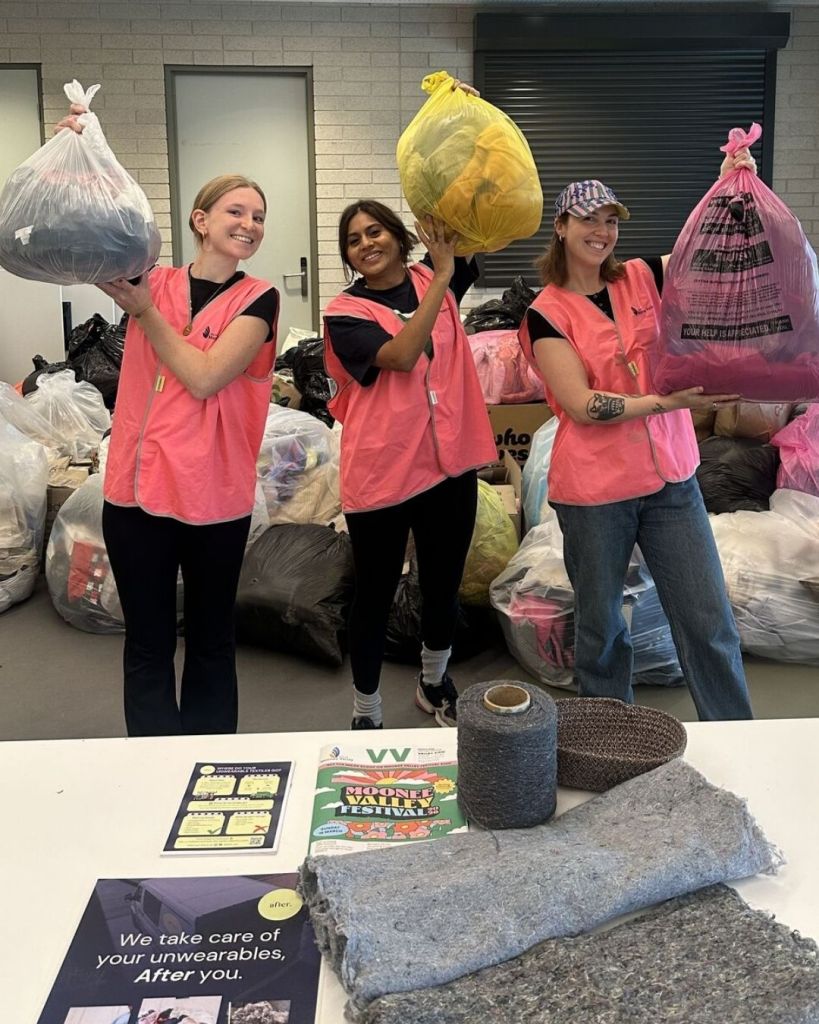
After collects unwearable clothing and bedding from households, businesses, and councils, then sends it to recycling partners who process it into raw materials such as recycled yarn.
It began with small collection rounds in Melbourne and now runs across Australia and in Auckland, and reports diverting more than 190,000kg of textile waste to date.
Where To Find Yesha And After
- Website: after.net.au
- LinkedIn: Yesha Patel
- Instagram: @after_anz
- TikTok: @after_anz
- Facebook: After
- Book a collection: after.net.au/booking-direct
Catherine McDougall, Support Plus
Catherine McDougall received the second $2,500 grant for Support Plus, a platform built for unpaid carers looking after someone with a disability, dementia, complex needs, or age-related support needs.
She built it out of her own experience. Catherine became the primary support person for her father after he had a severe stroke in 2022, and found there was no sensible place to keep everything a carer needs to hold in their head, according to her Enterprising Me profile.

Australia has around three million informal carers, according to the AIHW. Women make up 68% of primary carers.
Support Plus gives carers one place to record the routines and details that formal carers typically have systems in place to manage. Keeping track of daily and weekly needs, including medications, appointments, contacts, and preferences, adds to the demands of an already under-supported role.
Carers can also control who sees what, while a handover module allows someone else to step in without starting from scratch.
The funding will help make the platform available in more languages, which matters for carers and families from culturally and linguistically diverse communities.
Where To Find Catherine And Support Plus

- Website: supportplus.net.au
- LinkedIn (Catherine): Catherine McDougall
- LinkedIn (Support Plus): Support Plus
- Instagram: @supportplus01
- Facebook: Support Plus
Amelia Godfrey, Pelvy
Amelia Godfrey won the $2,000 People’s Choice vote for Pelvy, an app built to make pelvic health information and treatment support easier for patients to access and follow.
She is building it while working part-time as a physiotherapist, and went through the Startmate fellowship in 2025.

“This was our first grant, which meant the world to me as a bootstrapping founder and part-time physio,” Amelia said. “This will help go towards the development of Pelvy’s next feature, allowing patients to securely take and store photos and videos directly within the app.”
“This means clinician handouts, written advice, and personalised exercise demonstrations that we don’t have in the library can all be kept in one place, instead of getting lost in a patient’s camera roll, making it easier for patients to follow their treatment plan.”
Pelvy covers pregnancy, postpartum recovery, pelvic pain, sexual health, bowel conditions, and menopause, with clinicians able to subscribe and give their patients access.
Where To Find Amelia And Pelvy

- Website: pelvy.app
- LinkedIn: Amelia Godfrey
- Instagram: @pelvy.app
- Facebook: Pelvy App
- YouTube: @PelvyApp
- Download Pelvy Patient: App Store and Google Play
Why Small Grants Matter For Early-Stage Founders
Though a few thousand dollars will not build a company, it often decides whether a founder gets to keep going at times of difficulty.
At this stage, money moves straight into the things that have been sitting on a list: a first production run, the legal fee that keeps getting deferred, a translation budget, an accessibility fix, a marketing test, or even investing in professional branding.
Those are the items that get cut first when cash is tight, and they are usually the ones that help move a business forward to the next stage.
The gap the fund is responding to is tirelessly documented, though change is slow. Female-only founded startups raised just 2.9% of venture capital invested in New Zealand in 2024, according to The Gender Investment Gap, the annual report by Jenny Rudd and Theresa Gattung.
In dollar terms, that is $4.59 million of a $159.9 million pool, or 97 cents in every dollar not reaching solo-women startups.
RNZ called the figure “appallingly low”.
“Too many great ideas never get the chance to grow because the funding system wasn’t built with women in mind,” Kate said in the fund announcement, as reported by Women’s Agenda. “This fund is small in the scheme of venture capital, but it’s meaningful, practical, and founder-first. Sometimes a few thousand dollars is the difference between giving up or going all in.”
Grant money with no equity attached, alongside mentorship from someone who deeply understands the pressures of being a women in early-stage business, is worlds different to typical investment. There is no board to satisfy that doesn’t understand your problem space, not any looming repayment schedule.
Read: “Build Anything”: Tara Iwamoto is Closing The AI Gender Gap, One Vibe Coding Workshop at a Time
Who The Fund Backed In Its First Year
The 2026 round was the fund’s second. The 2025 pilot attracted thousands of applications and shared $10,000 across three founders, who each put the money into a specific operational bottleneck rather than anything showy, as Women’s Agenda reported.
- Hannah Killgour of The Pēpi Pozy, a Māori clothing brand for the whole family, used hers to move from air freight to sea shipping, which freed up enough margin to make her first hire.
- Lucy Kough of Tap the Gap, the Australian fintech turning everyday spending into superannuation contributions, put hers towards legal costs.
- Grace Toombs of June Health, an at-home cervical screening and STI testing service, spent hers on a marketing campaign.
The Bottom Line
Kate has built the fund around the kind of help she needed when starting Moodi. For this year’s recipients, that means being able to act on plans they already have.
We’d like to see more established founders follow her lead.
Keep Exploring
- Learn more about the Moodi Female Founder Fund and future rounds
- Follow Kate Gatfield-Jeffries on LinkedIn and Moodi for the next application window
- Check out the 2025 recipients here: The Pēpi Pozy, Tap the Gap, and June Health
For more on money, work, and building a career that fits your life, explore our career and money articles.
Leave a Reply