

Summary: Skincare brand Skin Control made its Australian Fashion Week debut at the Jordan Gogos show, with models wearing pimple patches across their faces, arms and bodies as deliberate styling elements. The moment reflects a broader cultural shift in how blemish care is viewed – less as something to hide or medicinal, and more as a confident, playful way of being kind to your skin. As Australia’s number one selling pimple patch brand, Skin Control’s runway appearance suggests pimple patches have officially evolved from skincare staple to fashion accessory.
If you’ve been slapping a pimple patch on your face and then hiding from the world until it’s done its job, Australian Fashion Week has some surprising news for you: that patch might actually be an accessory to your outfit.

Skincare brand Skin Control made their AFW debut at the Jordan Gogos show – and they didn’t go subtle.
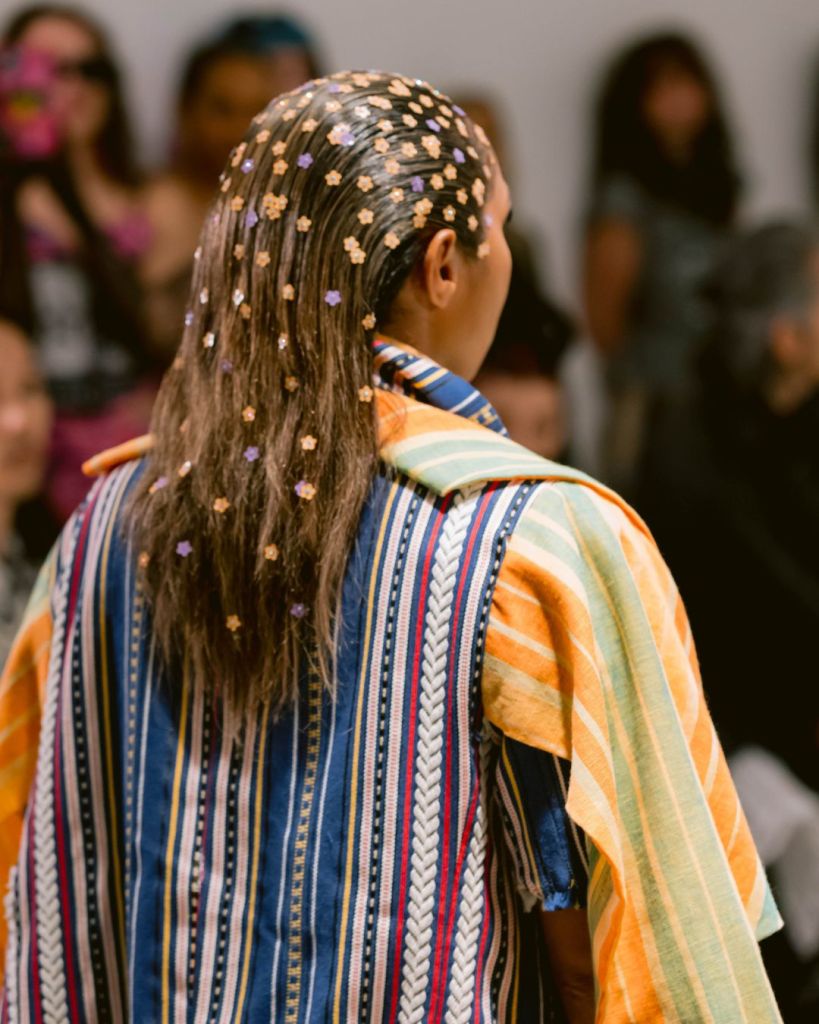
Models walked the runway with Skin Control patches worn across their faces, arms, and bodies. The bedazzled blemish covers were styled, deliberately, as part of the looks.
From The Bathroom Cabinet to the Runway
The pimple patch has had an interesting cultural journey (remember the “is it professional or is it not” conversation?).
Though for a long time, pimple patches were something worn at night only – then slowly clear, more unnoticeable ones crept into the daytime, often in desperation thanks to misbehaving skin.

Now, it’s rare to go out in public and not see a stylish 20 or 30-something rocking a bright purple star over a blemish throughout the day.
Our feeds feature our favourite creators rocking them in content, even centring entire makeup looks around blinged-out patches.
People wear them to the shops, on flights, and now – officially – at Australian Fashion Week.
The aesthetic shift reflects our changing understanding of skin and the long-overdue normalisation of acne.
It also reflects a more holistic approach to skin and skin barrier health. We don’t just treat or target blemishes at night anymore – we know they need gentle protection during the day too, and pimple patches are one way people do that.
That’s a long way from the cake-on-and-cover-with-concealer-at-all-costs approach many of us grew up with.
Read: 9 Creators Share How They Feel About Having Adult Acne And Showing up Online

Jordan Gogos – who has shown at Australian Fashion Week five times – took that logic and ran with it. The creative director and designer, known for maximalist, joyful work that refuses to take itself too seriously, leaned into the idea of skincare as adornment.
“Skin Control is never-ending freedom to make your face or body a canvas for possibility,” Gogos said. “We reconfigured Skin Control products a million and one times into things as playful as a sticker book or as high-end as couture gets. We couldn’t get enough.”
Makeup is Slowly Becoming Skincare-First
Any experienced makeup artist will tell you that skin prep and skincare is an essential part of any makeup routine.
Lead MUA for the show Lillian Susan describes the collaboration as a reimagining of what skincare products can do when you take them out of their expected context.

“In this collaboration, Skin Control’s pimple patches are reimagined beyond their everyday function, transformed into sculptural elements and wearable skin art,” she said. “I’m so excited to use this new medium to turn skincare into adornment and self-expression.”
The framing of skincare as medium rather than maintenance is refreshing, and we’re looking forward to seeing how this approach reflects itself in fashion and makeup moving forward.
It’s the same impulse that’s driven the rise of skinimalism or “skin-first makeup”, and the broader move away from covering skin up in favour of working with it, often inspired by professional makeup artists.
The Australian Brand Behind The Moment
Skin Control isn’t a newcomer, holding the title of Australia’s #1 selling pimple patch and #1 acne care brand, and sells one product every four seconds across Australia and New Zealand.
Co-founder Michael Porter framed the AFW appearance as a reflection of where the conversation around skin is heading.
“Pimple patches have evolved far beyond skincare alone – they’ve become part of the beauty and fashion conversation, embraced as a form of self-expression and individuality,” he said. “Seeing them styled on the runway reflects a broader shift in culture, where consumers are confidently embracing skin positivity rather than concealing it.
“Australian Fashion Week is known for setting the tone for what’s next, so to have Skin Control and our pimple patches featured in that environment feels like a defining moment for the brand – and a testament to how pimple patches are having a moment in the zeitgeist as a fashion statement.”
Porter recently appeared on The Lazy CEO Podcast with Showpo founder Jane Lu sharing about the early days of starting Skin Control.
Why This Matters
Acne is one of the most common skin conditions worldwide. The idea that it needs to be invisible – or that treating it is something to do in private or at night time – completely denies the reality that better outcomes for skin and skin health happen around the clock with a holistic approach.
So though you may not be walking out of the house covered head to toe in bedazzled pimple patches any time soon (we won’t judge you if you do), you might find yourself inspired for your next festival look – or at least less hesitant the next time a blemish needs some extra love during the day.
Models wore the Skin Control Pimple Patch Flower Power patches.
All imagery courtesy of Skin Control and the Jordan Gogos AFW show.
Related Reading
- 9 Creators Share How They Feel About Having Adult Acne And Showing up Online
- Bioré Celebrates Launch of Their New 100% Invisible Paint on Pimple Patch With Skin Advocate Madeleine Edwards
- Here’s 10 Things I Wish I Knew Earlier About my Adult Acne Prone Skin
Leave a Reply