
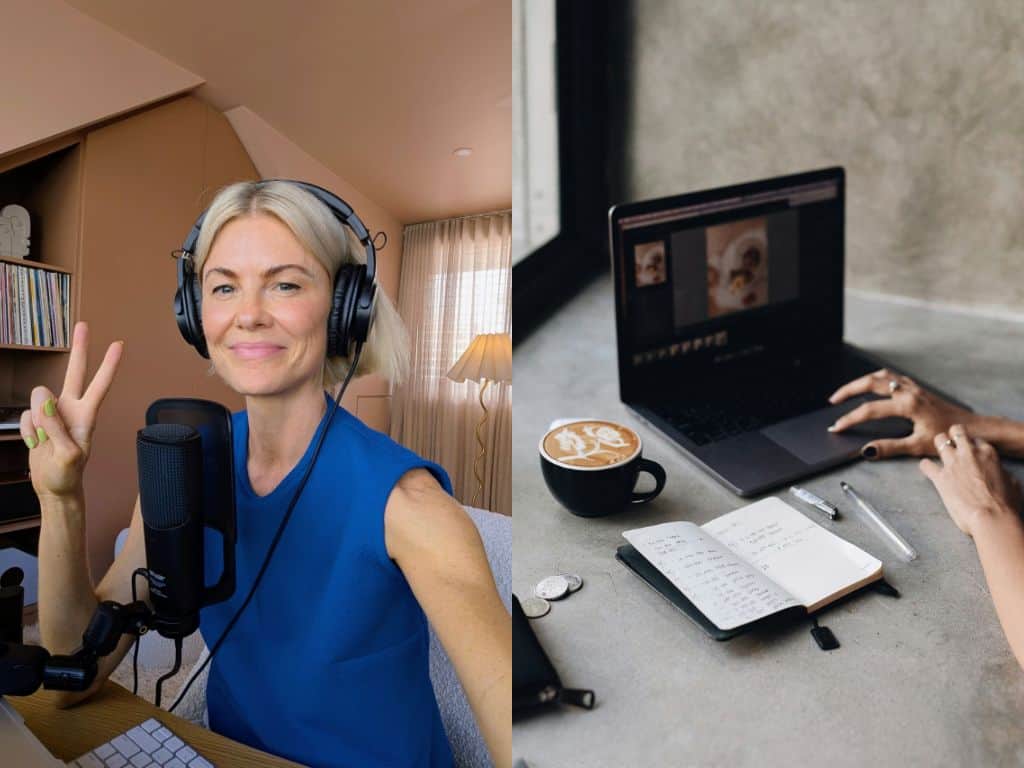
Meet Sophie Hirst, the founder of Work Baby, a platform helping women level up at work without burnout.
Before launching her own brand, Soph built her career across Google, YouTube, Myspace, and Nylon Magazine, managing high-performing teams and learning first-hand what makes some careers soar while others stall.
Now, through Work Baby, she’s turning decades of hard-won lessons (and hundreds of thousands of dollars in executive coaching) into practical tools anyone can use to grow at work.

Read: 4 ways to Think like a Software Engineer and Win your next Project
Soph’s focus on mastering influence and building trust helps rewrite what professional growth looks and feels like at work — especially for women at different stages of their careers.
We’ve asked her 6 we’re-desperate-to-know questions, read Soph’s answers below:
What words would you share to the skeptics of caring about work? What are they missing out on?
On one level, there’s something kind of healthy about seeing “work as work.” It keeps life in balance (I definitely could have used a bit more of this attitude in my career!).
But if you never invest in refining a few foundational skills — communicating clearly, managing your time, influencing — you miss the chance to make work easier and yourself happier. Most studies into our happiness at work show it’s not actually salary, title, or cool projects that matter most.

Read: 5 Magic Questions For Work Relationships
It’s three things:
- Your relationship with your manager,
- a sense of daily progress,
- feeling connected to the people you work with.
And those don’t require big changes, just small habits that unlock trust and ease.
For Example: Build clarity with your manager by closing the loop.
After a conversation: “Let me replay that back to make sure we’re aligned…”
Later: “Here’s what you asked for, here’s what I did, here’s what I’d recommend next.” That kind of clarity makes work feel smoother and lighter.
The goal isn’t to become a “career climber” — it’s to protect your energy and get home on time. Improving your work habits isn’t about ambition. It’s about freedommm.
From your time at Google/YouTube, what sets top performers apart?
The cool thing is there were lots of different types of top performers — people who were more strategic and were always launching amazing projects, people who were excellent collaborators and were adored for the way they could bring people together.
But when I look at what was consistent across all of them, these 3 things really stand out.

Read: How To: Rubber Duck Debugging. A Problem-Solving Tool Beyond Coding
- They built trust by helping other people to be good at their jobs, not just themselves. Some people compete to get ahead. This works for a while, but in the long term, it means that people don’t trust them, so they can’t actually do their job that well. Solving problems, moving at speed, getting things you need from other people – this all comes down to trust. Top performers invest in relationships, they help people when they need help, they bring people in and share credit as a team effort.
- They’re high impact + low drama. By high impact I mean they get the job done, they solve problems and roll up their sleeves to move things across the finish line. And they do it in a low-drama way — they don’t gossip, they don’t catastrophize small problems, there’s a level of resilience in the way they take things in their stride. They don’t just take a problem to their manager, they take a problem + a recommended solution.
- They’re consistent. This sounds like a no-brainer but one trap that actually brings some top performers down, is a lack of consistency. They can go really hard chasing a big shiny project. Do well for short periods, but burn themselves out. Top performers are simply dependable. They tell people what they’re going to do, they do it, they tell people they did it.
What are “soft skills” and why do they matter?
“Soft skills” are people skills: things like communication, empathy, reliability, adaptability, confidence. They’re called “soft skills” because unlike “hard skills” (technical, measurable abilities like coding or accounting), they’re interpersonal and harder to quantify — though ironically, they often have the hardest impact on your success.
They’re what make other people want to work with you.

Read: How To Give Feedback To A Peer (Without Feeling Weird)
You can have the best technical skills, but if people find you confusing, defensive, or hard to work with, at some point you’re going to stall in your career.
Example: The most badass soft skill, that has a flow-on effect to every single other soft skill, is empathy. The ability to get out of your own head and see things from other people’s perspective. One way you can start practicing this is to ask more questions.
- If someone won’t let something go ask “What’s important to you about this?”.
- If they say something confusing ask “Can you help me understand what you meant by that?”.
- If they say something that upsets you “That landed differently than I think you intended, did you mean that to sound [eg rude]?”.
Questions are a window into other people’s worlds and you’ll start to understand how they think and what’s going on for them. At work this is like a mind-reading superpower.
Read: Pushing Back and Saying ‘No’ at Work
What about for women re-entering or restarting their career — where should they start?

Don’t try to sprint back in. Start by updating your awareness — what’s changed in your industry or role? Reach out to people you trust and ask them to walk you through what a typical day or week looks like for them. What kinds of things they’re doing? What kind of skills they’re using? This is a really good way to start feeling connected again.
Focus first on confidence through competence. Remember that confidence is a feeling that comes from doing. Pick one project (or even a course) you can focus on doing well, and then build up from there.
Get work-fit again (gently). I really struggled coming back from maternity leave the second time.
I didn’t even remember how to book meetings properly or use video calls (I’m not joking either, I’d worked at Google for 10 years but things changed a bit and when you haven’t done something for a year, it’s how quickly you forget).
Start by blocking time in your calendar to plan when you’re doing things (start-end times, lunch breaks, working out). Schedule time to get bigger tasks done aka your “Big Rocks” (I aim for two hours of focused work a day).
Keep a running list of small tasks that take 5-10 minutes aka your “Task Pebbles” so whenever you have a bit of time spare, you can look at that list and just check them off quickly in one go.
Most importantly be kind to yourself. I talk to so many women and everyone struggles re-entering or restarting in their career. So you’re in good company.
When is it time to move on from a workplace?

Read: Quitting a Toxic Corporate Job: The Hardest And Best Thing I’ve Ever Done
I’m very pro changing jobs, when it’s not feeling right. Life’s too short to be unhappy at work when we spend so much of our waking hours there. Here are some of the times I’d consider making a move and changing your work sitch:
- When feedback or growth conversations go nowhere, no matter how clearly you try. For me a company that shows zero interest in investing in your career growth or your learning & development, is a big red flag. It sends a message that they only care about the company. If you’ve been having conversations for a year about wanting to develop certain skills or grow in your career and you feel like they are ignoring you, I would start to look somewhere else.
- When the culture rewards burnout or blame rather than learning. Psychological safety in a team is the number one thing that I would personally optimize for in my career. Psychological safety means that you feel safe to make mistakes, experiment and show up as yourself. A lack of psychological safety feels like you’re in constant self-defense mode—you second-guess everything, you’re afraid to ask questions or admit when you don’t know something, and every mistake feels like it could be held against you.
- When you’ve outgrown the role or your interests have changed. Sometimes it’s not that the workplace is bad, it’s that you’ve changed. One of the smartest things you can do in your early career is try a bunch of different jobs. It gets a bit harder as you get more senior so take advantage of it while you’re young. But it’s also never too late. I’m 43 and still pivoting my career and trying new things. In my experience after about 2-3 years in the exact same role, you really start to get a little itchy for new experiences – moving around in the same company is sometimes a great way to do it, if not start looking outside.
We want to know about Workbaby and your content — what’s exciting there?

Ooh, thanks for asking. I’m working on a course right now that I’m really excited to get out into the world.
People have responded well to all my social content but the problem with it is it’s fragmented — it’s whatever I can teach someone in 60 seconds, across such a mix of topics.
This course gives you a specific set of work skills that are foundational for spiralling up in your career.
Here’s a sneak peek at the outline that I haven’t shared with anyone yet:
- How to manage your time to get things done
- How to seek clarity and prioritize your work
- How to be concise in writing & speaking
- How to have a good relationship with your manager
- Dealing with hard things (a problem, tough conversations, overwhelm)
- How to embrace feedback not fear it
Find Soph on Socials
You can follow Soph’s journey (and get a few “why didn’t I think of that?” work hacks) via @sophworkbaby on TikTok and Instagram, or join her Substack newsletter to stay in the loop on new courses, applicable career advice (the best kind, no linkedin jargon), and sneak peeks at future programs.
Leave a Reply