
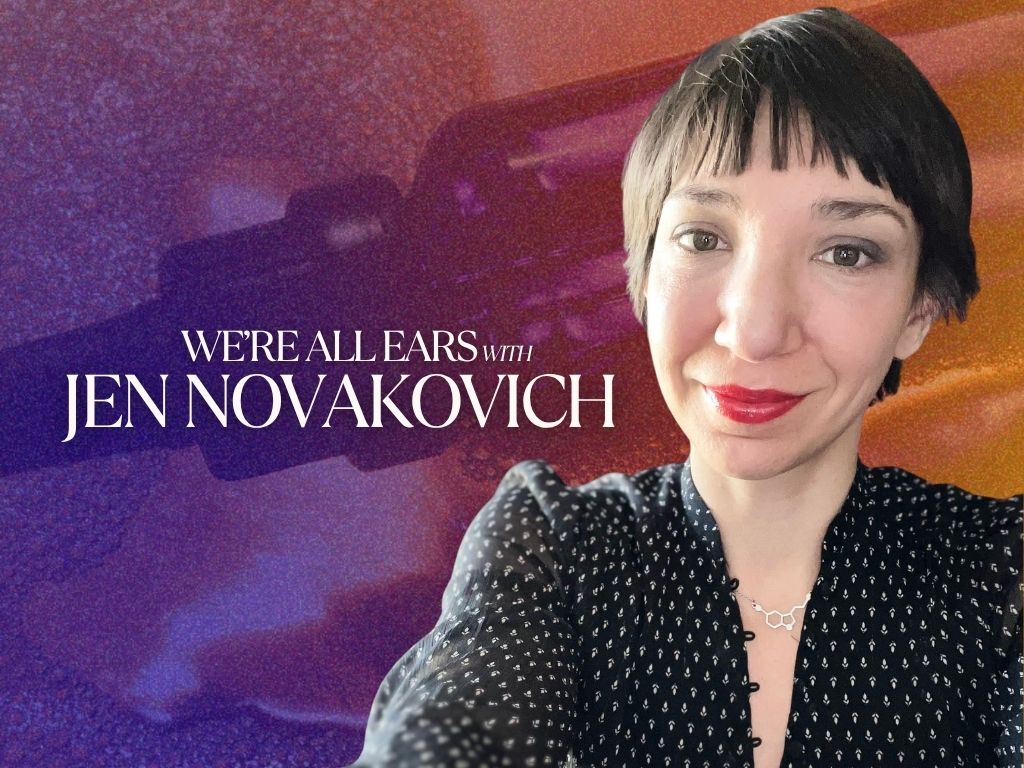
Canada-based Jen Novakovich of The Eco Well (@theecowell) has grown a following of over 120,000 beauty science lovers across social media, a number that continues to grow alongside the beauty sector’s industry boom.
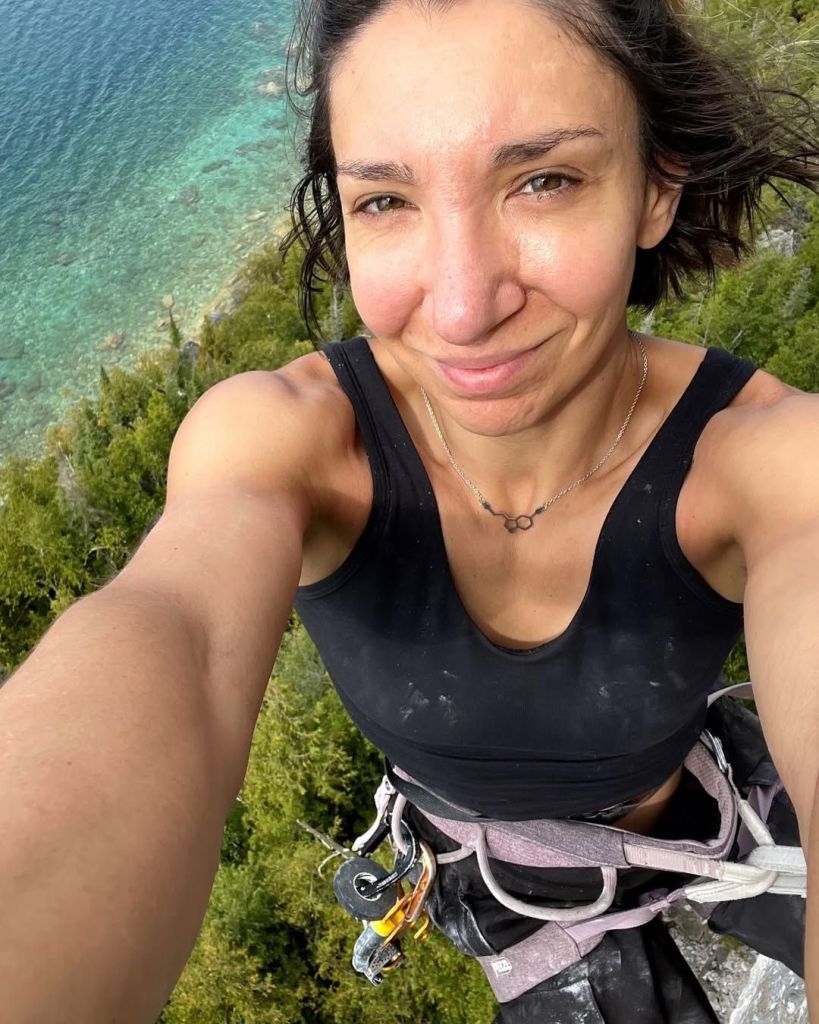
Between her time outdoor lead-climbing in remote Ontario and co-founding BeautySciComm with Dr.Michelle Wong (@labmuffinbeautyscience), she’s created a free-to-access beauty science e-summit initiative that surpasses the current – often lacking – standards for conference education and up-skilling.
Jen’s audience, dense with industry professionals and self-professed “nerdy” skincare enthusiasts, show up in the tens of thousands for the online events that would typically cost upwards of $2,000USD to just get through the door.
We spoke with Jen about how and why she’s made such high-quality education free, and what barriers still exist in the beauty science space for anyone wanting to enter the industry.
The Problem With The Current Professional Development Model
The existing professional development structure typically follows a predictable pattern: travel to a major city (like New York or London), pay upwards of $2,000 USD in registration fees before you’ve booked a hotel or flights, then hope the speakers were chosen for their expertise rather than their willingness to pay for the slot.
Not to mention little to no post-event follow up, with no easy way to access the content you’ve invested so much in.
For a lot of people – students, small brand founders, independent professionals, anyone based outside a major city centre – that isn’t a possibility.
Jen noticed that gap early, being based in a rural community in Ontario, Canada.
She’d spent years working across formulation chemistry, regulatory policy, environmental science, and sustainability before turning her focus toward something she felt the industry was missing: upskilling that was accurately vetted and accessible, while still being technically rigorous enough to be relevant.
The result is The Eco Well’s free e-summit series – a long-running initiative that has now brought together more than 30,000 attendees and 140+ vetted speakers across more than 12 virtual conferences, all completely free to attend and still live on The Eco Well Youtube channel.
Free And Virtual Doesn’t Mean Lacking

The Sustainable Beauty E-Summit, The Eco Well
True accessibility for Jen meant keeping the e-summits free and fully virtual. Sharing “I have a global audience, with attendees in places like Africa to remote rural communities, where travel to in-person events in New York or London is absolutely not viable,”
“For me as an independent science communicator living in a remote community in Ontario, I wish I had something like this available when I was younger – finding accurate information would have been so much easier.” says Jen.
It’s a conviction she holds even as the funding landscape shifts around her. Sponsors are increasingly directing budgets toward in-person events, and the perception that free means lower quality is one she finds herself pushing back on constantly.

“Cost is not a reliable indicator of credibility. The idea that virtual events are inherently less valuable tends to come from prestige culture, not from what actually helps people learn and make safer products.”
The irony, she points out, is that the accessibility problem has spread further up the industry than many people realise.
Even professionals at major beauty conglomerates are now finding it harder to secure a budget for conference attendance – yet those same companies continue directing sponsorship toward traditional in-person models that cost as much to sponsor as her events do to attend.
“I am adamant about keeping my events fully virtual and free because I know how many people are left out otherwise. I strongly believe big companies should be subsidising quality information.”
The Problem With Expensive Conferences
The cost barrier is frustrating enough on its own. What makes it harder to accept, Jen says, is that the price tag doesn’t guarantee the information is any good.
“What is unsettling is that high-cost conferences often don’t do a stellar job vetting their speakers – because they often don’t have the right technical people to do it. There’s also often a pay-to-play aspect for speakers that isn’t disclosed to audiences, who are also paying. That makes the problem worse.”
Getting into the room, in other words, doesn’t mean what you’re hearing is accurate or independent. It can even mean a speaker has paid to have that platform and corresponding tick on their resume.
With Beauty Booming, What’s Actually at Stake?
Beauty product development can look simple from the outside, especially as the pace of fast-moving trends has condensed traditional timelines.
Formulation is only one piece of the puzzle. Navigating regulation, safety testing, claims substantiation, and supply chain decisions requires a level of technical literacy that doesn’t come from a YouTube rabbit hole or DIY skincare blogs – and the consequences of getting it wrong are significant, and ones we see more often in a industry with growing pains.
“Getting some of this stuff wrong can translate to a million-dollar-plus class action lawsuit,” Jen says.
“It can result in unsafe products entering the market because the brand didn’t understand how to verify product safety before launching.”
The risk can be heightened with skincare startups who lack the structure in-house. “There’s a reason smaller brands tend to bear the brunt of these situations. It takes significant technical knowledge – which is very expensive to access – to navigate this.”
When that knowledge stays concentrated among those who can afford specialist consultants and deep regulatory expertise, everyone else figures it out the hard way, and not every brand bounces back.
How The E-Summits Work
Every summit topic is crowd-sourced. In the early months of each year, Jen polls her audience on what they want covered.
From there, the vetting process starts with her – she works professionally as a fact-checker and expert vetter for cosmetic science topics – and extends to a community of subject matter experts who help assess speakers outside her immediate area of expertise.
“In the end, I try to feature the best person for each topic. If I can’t find a suitable person, I remove it from the agenda.”
For the most recent Product Development E-Summit, Jen also had support from Dr. Akemi Ooka PhD and Meredith Petillo from the Independent Beauty Association – who both bring deep expertise in the product development challenges facing small and mid-sized brands specifically.
Read: Inside The Eco Well’s Product Development E-Summit 2026: What to Expect and How to Attend Free
Who Should Tune Into The E-Summits
The short answer, as Jen puts it, everyone.
“I try my best to create an agenda that would be valuable for industry veterans while also being accessible and interesting to consumers curious enough to attend an eight-hour conference.”
That includes founders at every stage, formulators, regulatory and legal professionals, sustainability and supply chain teams, and consumers who want to understand how products are actually made – not just marketed.
It also, she argues, extends to policymakers.
“Legislators making rules in the US often don’t really understand how product development actually works – some don’t even know that brands rely on contract manufacturing. Better education changes outcomes.”
Attendee feedback reflects the breadth of that reach.
Since The Eco Well began formally collecting survey data:
- 100% of respondents said the e-summits were as good as or better than traditional industry conferences.
- Nearly 97% said they were better overall, with 69% rating them much better.
- 100% of respondents said the virtual format made it easier to participate.
The Bigger Picture
If the access to accurate beauty science information continues to be shaped by geography and budget, skewing heavily towards professional networks, knowledge doesn’t move as freely as it should and innovation can be stifled.
“The accessibility and quality gaps for accurate information sharing, including at industry conferences, get in the way of progress on things we all care about – safer products, more sustainable practices, better companies,” Jen says.
“These barriers limit access to many: students, brands of all sizes, folks in remote communities. They make it easier for misinformation to persist and harder for collective industry progress to happen.”
The next e-summit is The Science of Science Communication E-Summit, upcoming on the 3rd of May, 2026, expected to have a high turn out of beauty science communicators and content creators.
Speakers featured at The Eco Well e-summits are available for press commentary. Brands interested in supporting the initiative can contact The Eco Well directly at info@theecowell.com.
Related Reading
- Who Gets to Talk About Skincare? The Myth: Skincare Expertise
- Exosomes In Skincare – Are They The New Peptides?
- Everything you Need to Know About Peptides And How to use Them
Leave a Reply