

This article contains affiliate links. If you buy through one, we may earn a small commission at no extra cost to you. It never changes what we recommend.
This is my detailed review of A313, a cult French vitamin A ointment, based on five months of use on my sensitive, adult acne-prone skin – with visible changes by the four week mark.
I’ve tried a lot of vitamin A products over the years, including prescription options available in Australia, and I don’t say this lightly: A313 has become my current go-to not because it’s the strongest, but because it’s the one I can actually use consistently without my skin falling apart.
In this review, I’ll break down what A313 actually is, what type of vitamin A it uses, how it compares to stronger retinoids, and exactly how it performed on my skin over the first month of use.
Everything You Need to Know About A313, And Why It’s Worth The Hype

What Actually Is A313?
A313 is a cult French vitamin A ointment that’s gained a loyal following across Europe and, more recently, in Australia.
It’s created by PHARMA DÉVELOPPEMENT, a French pharmaceutical laboratory, and is so widely recognised that it’s often referred to simply as “A313” without the brand name attached.
The product itself is an ointment-style formula rather than a serum or cream, which can be surprising if you’re used to more modern vitamin A textures. But that rich, occlusive base plays a big role in how the product feels and performs on the skin.
What Vitamin A Does A313 Use?
A313 uses retinyl palmitate, a vitamin A ester, at approximately 0.12%.
On its own, that number doesn’t tell the full story. Retinyl palmitate is a gentler form of vitamin A that needs to go through several conversion steps in the skin before becoming retinoic acid – the active form that delivers results.
What’s important here isn’t just the type of vitamin A used, but how it’s supported within the formula.
The rich, ointment-like texture helps minimise irritation and support skin comfort, which for many people is what makes long-term vitamin A use possible.
How A313 Works (and a Quick Vitamin A Strength Overview)
When applied to the skin, retinyl palmitate converts step-by-step into retinoic acid. This slower conversion process is what makes it more tolerable for sensitive or reactive skin types.

Once converted, retinoic acid helps speed up cell turnover. This encourages dead skin cells to shed more efficiently, which can help brighten dull skin, reduce congestion, and improve the appearance of post-inflammatory marks over time.
On a deeper level, vitamin A supports skin renewal pathways associated with firmness, texture, and overall skin function.
With consistent use, this can translate to smoother skin, improved elasticity, and softened fine lines.
Why Retinyl Palmitate (and A313) Makes Sense for Some Skin Types
Retinyl Palmitate isn’t like its stronger counterparts, and it isn’t trying to be.
Because it requires more conversion steps, it tends to be better tolerated by sensitive, eczema-prone, or easily irritated skin.
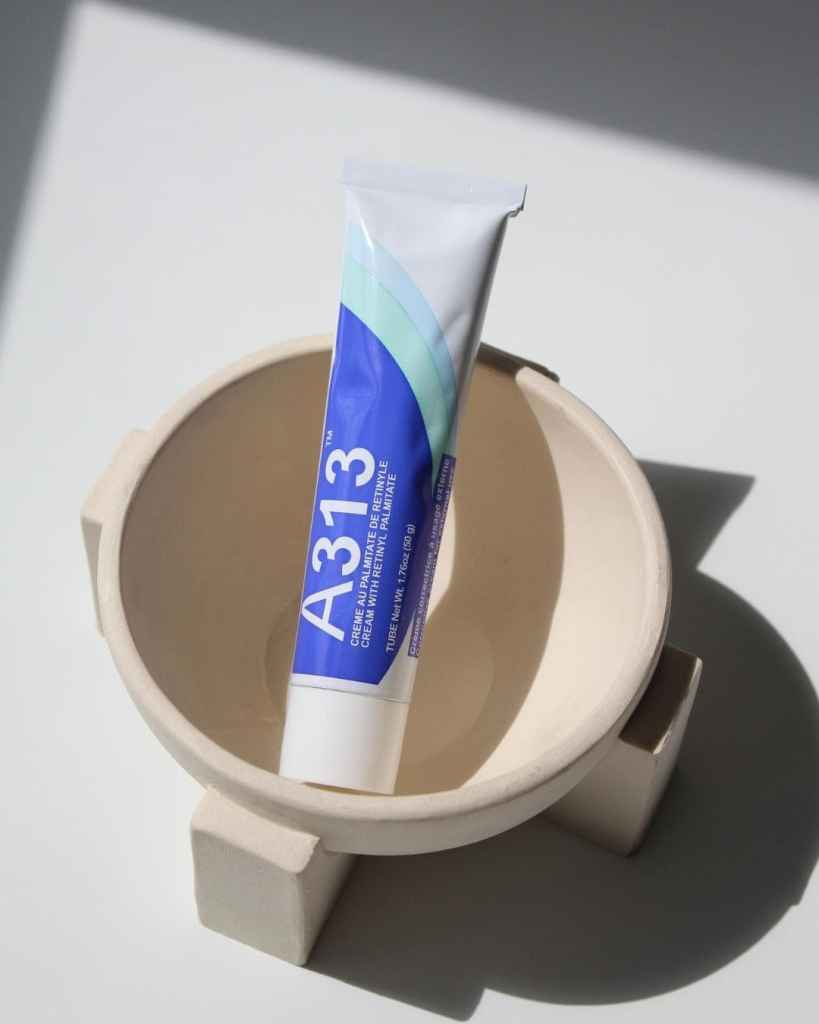
For many people, it provides a way to introduce vitamin A without triggering the redness, flaking, or barrier disruption that stronger forms can cause.
Being in the skincare space I also personally hear lots of product wish lists for the perfect retinoid option.
Here are some situations that I’d say A313 is great for:
- People who may feel intimidated by Vitamin A or are very new to the skincare step.
- Someone wanting consistency in their routine.
- Flare up prone skin that’s extra sensitive.
- Someone using a few actives in their routine, relying on other ingredients for the big results.
- If someone is wanting to build up tolerance overtime, A313 is a good first product.
Don’t be thrown off by the people saying a gentle vitamin A “wont work” or isn’t strong enough – as consistency is what will give someone results.
The Full A313 Ingredients List And What Each Ingredient Does
The confirmed ingredient list is short and simple:
PEG-8, PEG-75, Polysorbate 80, Retinyl Palmitate, Arachis Hypogaea (Peanut) Oil, Tocopherol.
Here’s what each ingredient in the formula does at a glance:
- Retinyl Palmitate (at ~0.12%) is a gentle vitamin A ester that supports skin renewal while minimising irritation risk
- Tocopherol (Vitamin E) provides antioxidant support and also helps keep the formula stable
- Arachis Hypogaea (Peanut) Oil is a rich emollient that helps soften skin and support short-term barrier comfort
- PEG-8 and PEG-75 helps create the smooth, ointment-like texture which A313 has, and both work with Polysorbate 80 to make the formula apply and spread more consistently
The Review: My Skin Type and Why I Tried A313
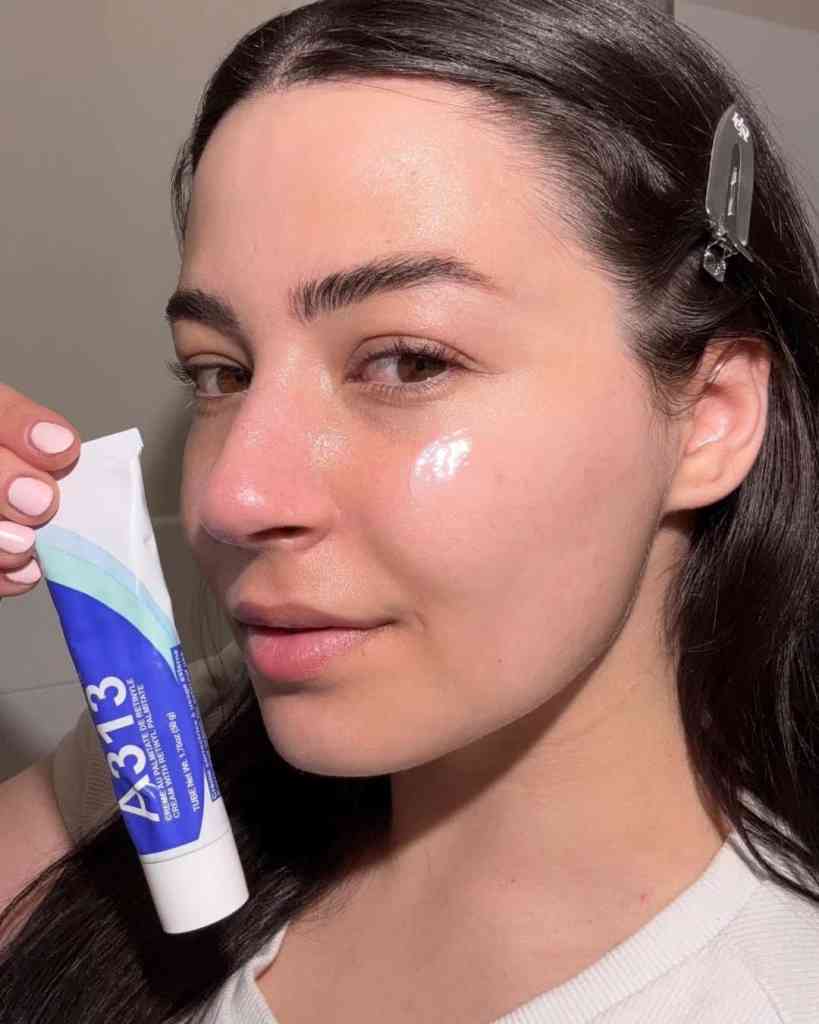
My skin is sensitive, acne-prone, and prone to post-inflammatory hyperpigmentation (PIH). Because I’m Middle Eastern, PIH tends to show up on my skin as purple or deep brown marks rather than redness.
People with lighter skin tones may experience post-inflammatory erythema (PIE) instead, which often appears pink or red and can linger for months.
My goals were simple: fewer flare-ups, less redness and irritation, improved scarring, and a vitamin A I could actually use consistently as I approach my late twenties – potentially to up the strength again in the future.
My History with Vitamin A And All The Retinols I’ve Used Before
For me, A313 serves a very specific purpose for my skin type and my skin needs, and I personally feel that my skin is looking the best it ever has.
Over my many years with Vitamin A, I have used:
- Prescription Vitamin A (specifically Stieva-A 0.05%),
- Medik8 Crystal Retinal 3 & 1,
- CeraVe Resurfacing Retinol Serum,
- Paula’s Choice 0.3% Retinol + 2% Bakuchiol Treatment,
- The Ordinary’s Granactive Retinoid 2% Emulsion,
- Avène A-Oxitive Night Peeling Cream (now discontinued)
- Avène Hyaluron Activ B3 Multi-Intensive Night Cream
Many of which I’ve loved, and I’m sure I’ve missed a few. All to say, I am an experienced vitamin A user, and you are not going to see any strong vitamin A trashing or hate in this review.
Why I Switched to A313 And my Experience With Eczema Flare Ups And Purging
I tried A313 because stronger retinols and vitamin A’s could trip me up more often than not, and I had taken a multiple month long break from them.
If I was having a sensitive skin week, I would experience a lot of the typical vitamin A woes – redness, flare ups, itchiness, dry eyes.

Near anything could trigger it, too. A sudden shift in weather, if I slacked on my routine, any allergy symptoms – don’t even get me started on trialing new skincare (my literal job!).
I was very over the puffy eyes, the eczema flare ups, and the sore almost-bruised feeling. Ouch.
Although my skin did have times when it acclimatised to stronger vitamin A, I still found that I would revisit some of these more beginner-symptoms every time my routine wasn’t “perfect”.
I do believe with all skincare products, consistency is key – the constant yo-yoing gave me issues, and I started to doubt some of the benefits being had if I kept stopping and starting to repair my skin barrier.
So I turned to A313 because I’ve had a very good time with French skincare historically, and the very gentle form of retinol made me feel more confident that I could be consistent with it alongside my other routine active ingredients of choice.
How I Applied A313 (And How Often)
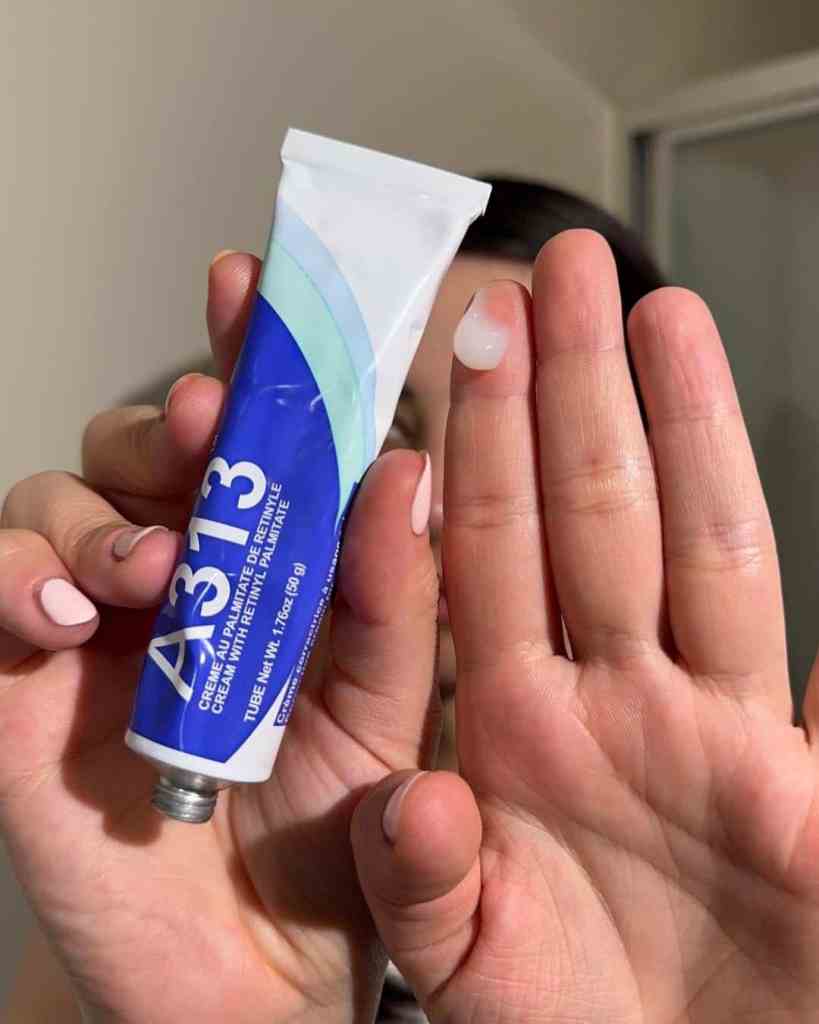
Starting off, I applied A313 as a last step in the PM (night time) x2 a week, and increased to nightly.
I also found that because my skin responded so well, I worked up to using A313 alongside other active ingredients like Finecea (a 15% Azelaic Acid) – and had no issues.
For how much to use, a pea sized amount is perfect. Warm it up in your hands and gently apply to the skin, and bring any excess down your neck.
Personally, I found there was no purging or irritation using A313, and I found that from the first use, my skin felt and appeared more hydrated (thanks to some of the hydration locking aspects of the formula, so definitely a perk!).
The Texture, Scent, and Formula Breakdown of A313
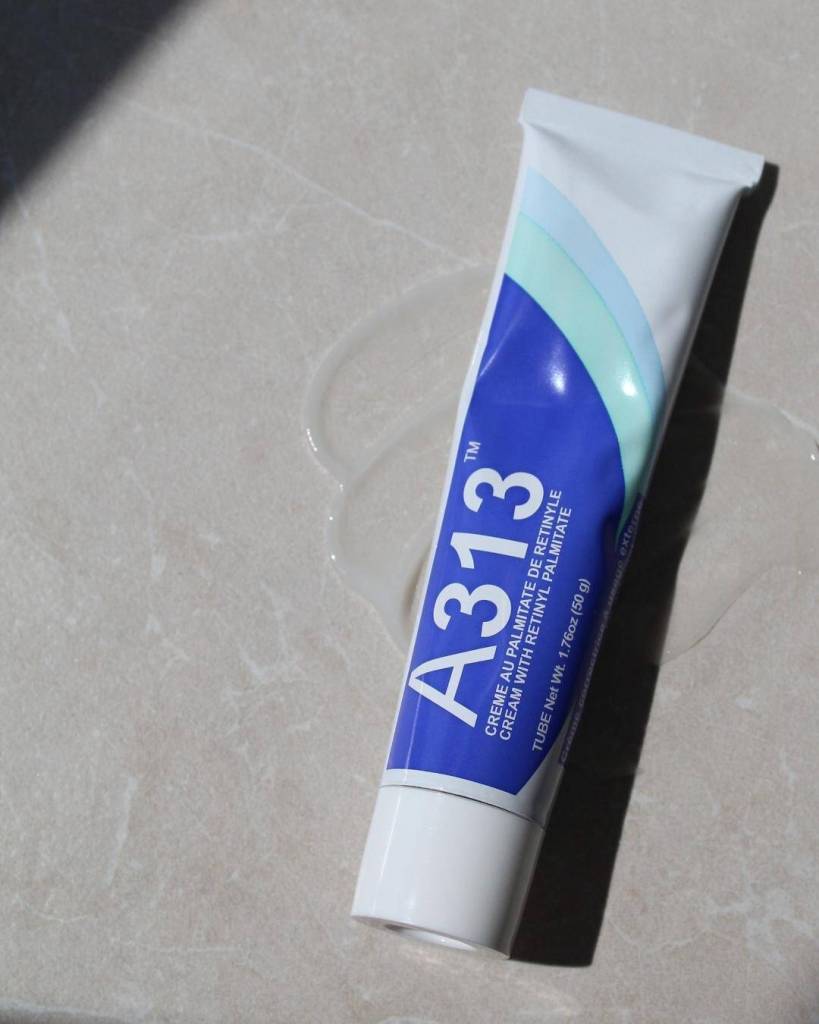
The texture of A313 is like a more emollient / richer Vaseline type ointment, and it’ll probably surprise you if you’re used to the typical serum or cream vitamin A.
The scent is ever so slightly vinegary, but I find that subsides and doesn’t linger. It isn’t noticeable under my nose or on my pillow by bedtime.
You’ll notice on application there’s an obvious warming sensation which can catch you off guard, and some report some tingling (not burning or stinging).
The warming sensation is a purposeful part of the A313 formula that helps active ingredients distribute more evenly into the upper layers of the skin, equalling better absorption and results.
So, How Long For Results? My A313 Results After One Week, Two Weeks, and One Month
In the larger picture, Vitamin A takes time to work, and you should expect all the significant results in a few months time.
In the smaller picture, the formula works for your skin in multiple ways to promote glow, a smoother complexion, and happier skin – which is absolutely a perk, especially if you need the extra encouragement to stay consistent.
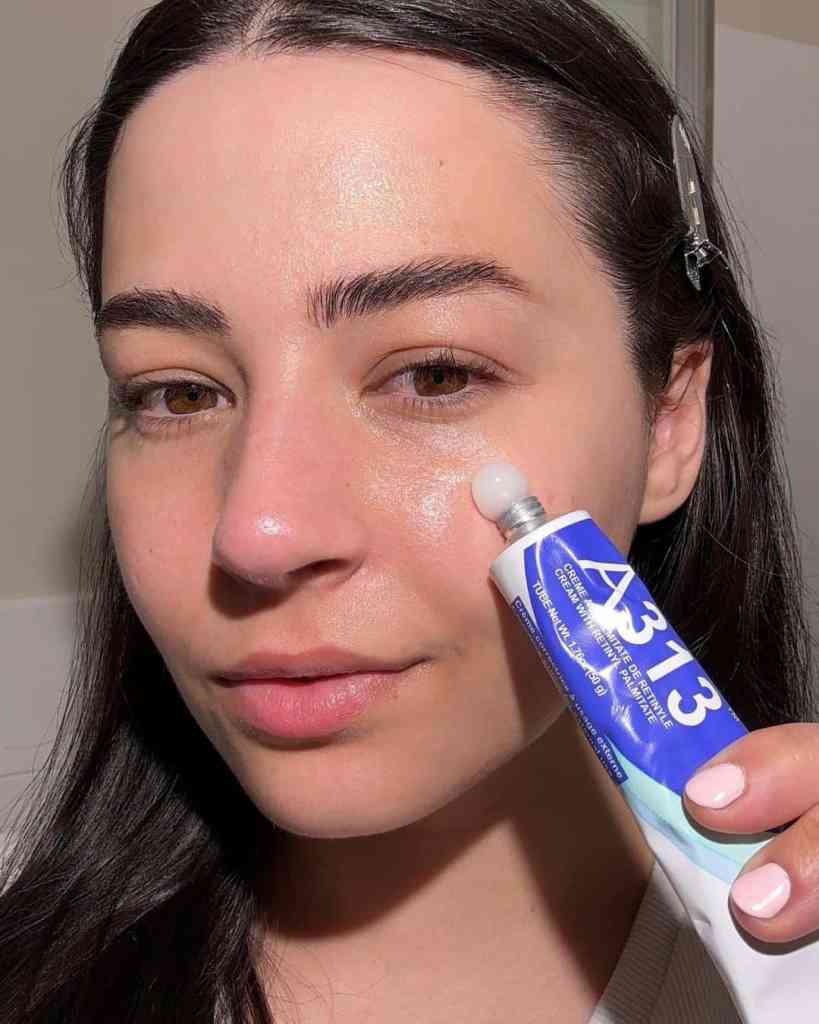
- Immediately and at one week (using x3 a week) I noticed my skin looked and felt more plump, which was a nice effect from the locking in action A313 gives my skin, much like how slugging can help plump your skin.
- On week two (using x4 a week), I noticed my pores looked smoother, and my face appeared less red.
- During week three (using x5 a week), I noticed less breakouts, less congestion (especially around my nose), and less redness.
- By week four (using nightly) I was completely sold. I remember going to an event without any complexion makeup and getting compliments on my skin.
My A313 Cream Before And After (1 Month of Use)
After four weeks my skin was noticeably improved, and I had less skin concerns. Happy to say my before and after (below) supports this.

How to Avoid Irritation With A313 (or Any Vitamin A, Really)
For extra sensitive skin havers, lots of the avoiding irritation tips are the same.
For me, applying a barrier cream around my eye area, nostrils, and mouth (or anywhere else I’m prone to flaking or irritation) is a great first step.
Other than that, you can also try these tried and tested methods:
- Applying vitamin A to bone dry skin. Damp skin helps penetration therefore can increase irritation when using any actives, including any Vitamin A.
- Using the “sandwich” method, which means to apply a moisturiser first, then your vitamin A of choice, then another application of your moisturiser.
- You can also use a barrier cream as a final step to seal everything in and promote calmness.
I’ve also made a full write up on this topic if you’re still feeling apprehensive. Read it here: How to Use Vitamin A Like a Pro And Save Your Skin Barrier.
Where to Shop A313
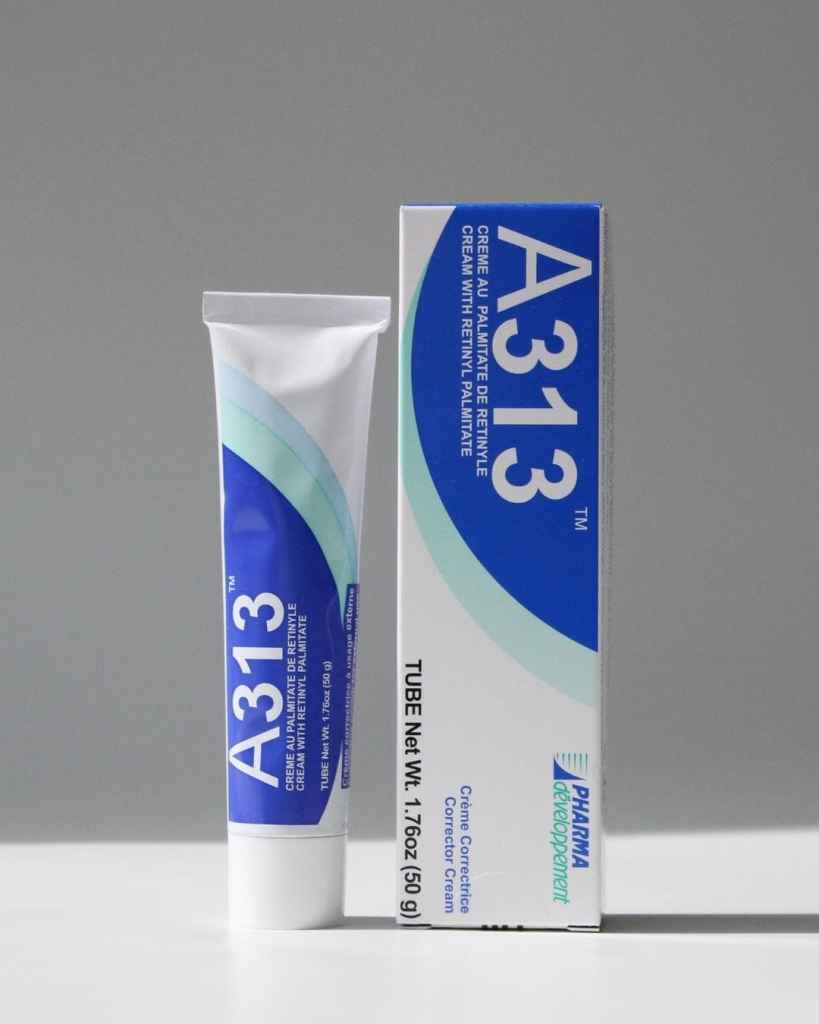
You can shop A313 at French Beauty Co, which is currently the only official stockist in Australia.
My Summary
For me personally, I look forward to using A313 every night and recommend it often. I think it’s a lovely balance of benefits, skin hydration locking in, and price point.
If you’ve struggled with stronger retinoids or feel stuck in a cycle of starting and stopping vitamin A like I did, A313 is a genuinely worthwhile option to consider. Let me know if you try it.
FAQs on A313
Here’s a bunch of frequently asked questions about A313 from my Instagram question box at @minnieisaac_ and some from Google. Please comment any I’ve missed and I’ll add them to the list below.
Where can you buy A313 cream in Australia?
The only official retailer in Australia is French Beauty Co. You can purchase A313 directly from the French Beauty Co website for under $35.00AUD.
For a limited time you can also get A313 in their limited edition Avec Amour Party box for $49.00, valued at over $90.00.
Can you get A313 at Chemist Warehouse or Priceline?
You cannot currently purchase A313 at Chemist Warehouse or Priceline. The only official stockist of A313 is French Beauty Co.
What is the full, confirmed A313 ingredient list?
I’ve seen incorrect information floating around about the ingredients list online, so made a point to contact the official stockist to confirm.
The official A313 ingredients list is: Peg-8, Peg-75, Polysorbate 80, Retinyl Palmitate, Arachis Hypogaea Oil, Tocopherol.
Where is A313 created/ made?
A313 is made in France, specifically by PHARMA DÉVELOPPEMENT, a French pharmaceutical laboratory which is located in Corbigny, in the Burgundy region of France.
Comparison chart of common product comparisons

A313 vs Differin (Adapalene)
Differin contains adapalene, which targets acne and clogged pores more directly and is generally more commonly used for acne-prone skin and clogged pores. A313 is a retinol-based vitamin A cream that works more slowly and gently, making it better for texture, early signs of ageing, and retinoid beginners.
A313 vs Tretoin
Tretinoin is already in its active form, meaning it delivers faster, stronger results for acne, pigmentation, and ageing but with a higher risk of redness and peeling. A313 suits those easing into vitamin A, while tretinoin is better for people wanting maximum results and who can manage the adjustment phase.
A313 relies on the skin converting retinol into retinoic acid, so results are slower and irritation is usually milder.
Avibon Vitamin A cream vs A313
Avibon is a now discontinued cult french vitamin A product. The texture of Avibon and results are often compared to A313, but it’s worth noting the Vitamin A content in Avibon is higher and stronger than A313. The texture has been described as quiet similar, hence the common comparison.
A313 vs Avène TriAcnéal
Avène TriAcnéal is a now discontinued popular French retinal product. Avène suggests their Avène Cleanance NIGHT Blemish Correcting & Age Renewing Cream as an alternative, which also contains retinal, but more recently have released their Hyaluron Activ B3 Multi-Intensive Night Cream which contains retinal, hyaluronic acid, and niacinamide – a pick I’d personally suggest over the NIGHT Blemish Cream.
In comparison to A313, the Avène TriAcnéal is a much stronger vitamin A product, and less appropriate for beginners.




Leave a Reply