


Contents menu for men’s skincare and hygiene routine:
Quick points:
- Skincare for men isn’t any different than skincare for women, or anyone for that matter – so don’t feel pigeon-holed into buying army green or black tubes, buy what works for your skin and budget
- The three essential skincare steps are: In the morning use sunscreen (ideally SPF50+ as most people under-apply), and at night cleansing then applying moisturiser
- Any “extra steps” should be built around and tailored to your specific skin concerns. More doesn’t equal better
- If you have any specific questions, ask them below in the comments
- Pick one or two things from this list that sound doable and relevant, give them a real go, and come back for the rest if needed
- If this article was helpful, I’d appreciate it if you filled out this skincare survey (approx 5min). We’re using answers to help how we build dewwie, a skincare app that provides clear skin guidance (coming soon!)
Important you know: this article contains some affiliate links, meaning White Rabbit Social earns a small commission if you purchase through our links. We only recommend products we use and love.
This is a mens skincare and hygiene guide I’m writing specifically from community questions from the Jordan Shanks Self Help community, though all are welcome!
You can see a routine in action by checking out “My Easy Skincare Routine For Men That Doesn’t Make my Girlfriend Cringe”.
My focus with product recommendations in this article is on larger, more affordable, no-frills options that just do the job.
If you want something more experiential or brand-aesthetic driven, I have plenty of those recommendations too – I’ll link articles throughout.
But everything here I’ve used and loved, and just because they’re simple and affordable doesn’t mean they aren’t absolutely fantastic.
Men’s Skincare Basics 101: What Skincare do Men Really Need to Use?
Skincare 101 starts with the bare bones essentials.
Most people come to skincare with a specific concern, but I’ve found the majority of skin concerns get solved when you have the three basics down – which you need to do anyway! So let’s start there.
Essential Morning (Also Known as AM) Skincare Step: Sunscreen
In the morning, the only essential step is sunscreen. It can be tricky to find one you love.
People usually recommend skincare based on skin type – normal, oily, dry, mature, sensitive, a mix of a few etc – which helps match up products.
But just as importantly, your skincare also needs to be somewhere you like to shop, in your price range, and enjoyable enough to actually use consistently.
Sunscreen works to give you the labelled SPF protection when you apply a generous amount – specifically a ¼ teaspoon on the face.
Sunscreen Recommendations Based on Skin Type
SUNSCREEN
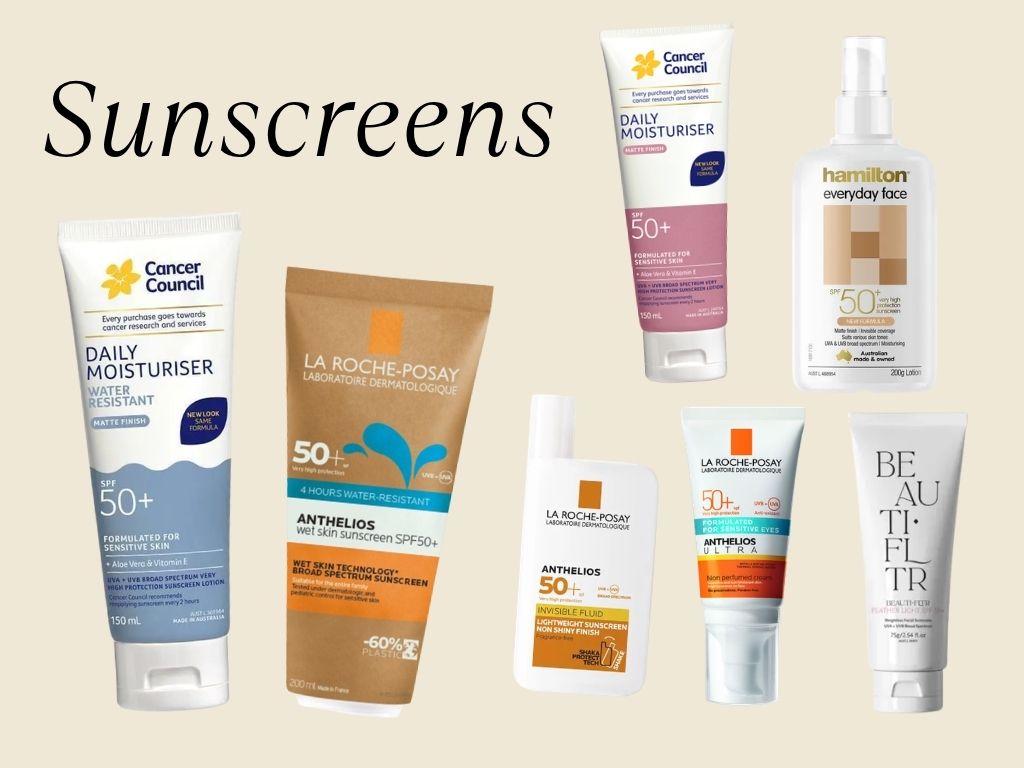
- Very sensitive eyes and reactive skin: La Roche-Posay Anthelios ULTRA SPF50+ Face Sunscreen (tested for sensitive eyes)
- Hate texture, want something watery and lightweight: La Roche Posay Anthelios Invisible Fluid SPF 50+
- Want to double as your morning moisturiser: Cancer Council Face Day Wear Matte or Hamilton SPF 50+ Everyday Face or Beauti-fltr Feather Light SPF 50+
- Covering your body head to toe: A big pump from Woolies or Coles home brand will do you good
- Surfers and water people: La Roche-Posay Anthelios Wet Skin Sunscreen SPF 50+ or Cancer Council SPF 50+ Face & Body Moisturiser Water Resistant
Essential Night (Also Known as PM) Steps: Cleansing And Moisturising
At night there are two essential steps: cleansing and moisturising.
Cleansing gets off the day’s grime, any pollution, sebum that’s built up, and breaks down the layer of sunscreen still sitting on your skin.
I typically recommend cleansing for a full 60 seconds – it can feel like a lot, but that’s usually what’s needed to get through everything.
Moisturising goes on while your skin is still damp and waterlogged to reduce dryness.
Cleanser And Moisturising Recommendations Based on Skin Type
Cleansers
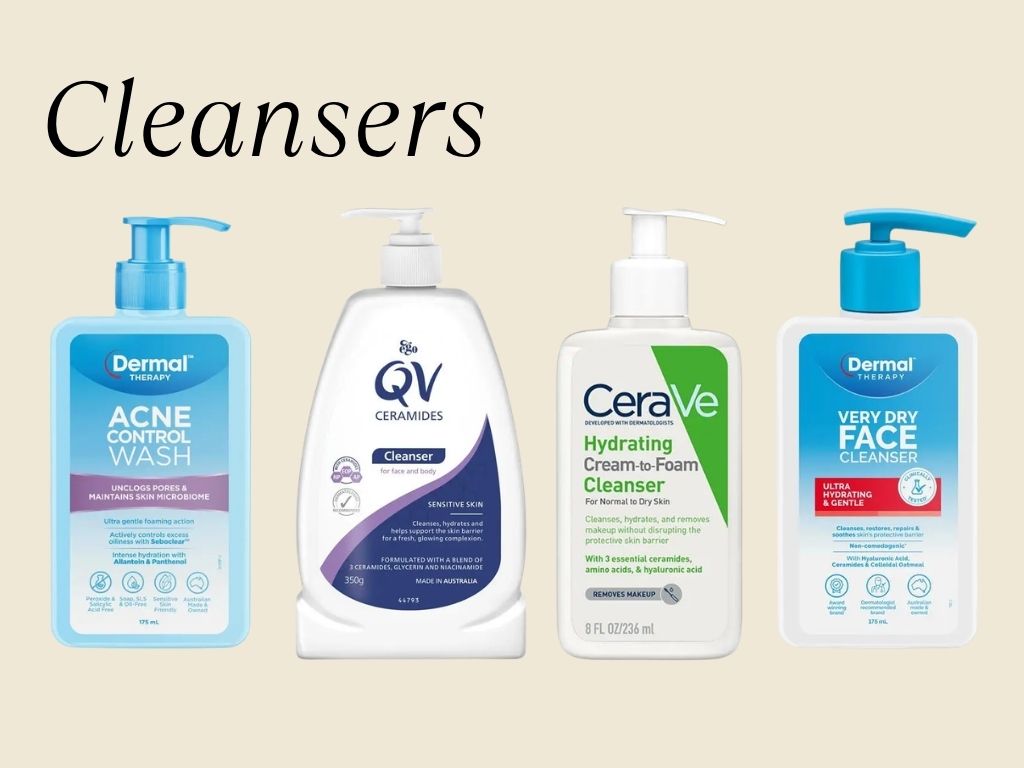
- Very dry, tight, flaky skin: Dermal Therapy Very Dry Face Cleanser
- Most skin types and normal skin: CeraVe Hydrating Cream To Foam Cleanser (note: it looks very similar to the hydrating version – the cream to foam is a different formula)
- Best bulk buy: Ego QV Ceramides Cleanser
- Acne-prone skin: Dermal Therapy Acne Control Wash
Moisturisers

The bigger bottles can be used face and body.
- Dry skin: CeraVe Moisturising Cream
- Oily skin: The Ordinary Natural Moisturizing Factors + Beta Glucan
- Combo skin: Dermal Therapy Acne Control Lotion
- Normal skin / best value: Ego QV Ceramides Moisturising Lotion
Concern-Focused Skincare Steps
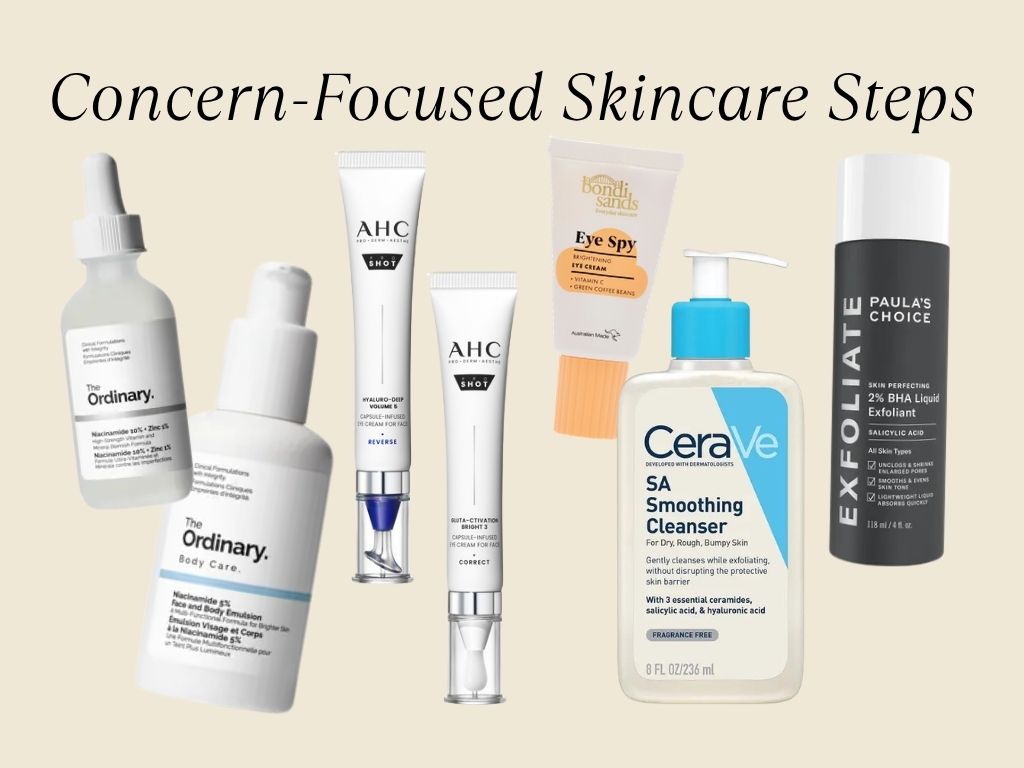
Once you have the essentials down, here’s where to go next if you still have specific concerns.
My approach is always do the least possible to get the most results, and stay consistent.
Hyperpigmentation, Uneven Tone, Oil Production
A niacinamide serum is a good catch-all first step. It helps even skin tone, controls oil production (whether you’re producing too much or too little), and can help the appearance of pores and texture.
- Mild dehydration, general concerns: The Ordinary Niacinamide 5% Face and Body (says face and body, you can use it on just the face – nice big bottle)
- Oilier, more breakout-prone skin: The Ordinary 10% Niacinamide (also comes in a big 60ml bottle)
Under-Eye Bags, Shadows, Puffy eyes
An eye cream can help, but temper expectations with concern-led skincare though. If you have genetic under-eye hollows, no eye cream will solve that. Same with genetically enlarged pores – skincare helps, but there’s no miracle cure.
- Dry around the eyes: AHC Pro Shot Hyaluro-Deep Eye Cream For Face
- Darkness from pigment, brightening: AHC Pro Shot Gluta-Ctivation Bright Eye Cream For Face or Bondi Sands Eye Spy Vitamin C Eye Cream
Blackheads, Large Pores
A Salicylic Acid is helpful, especially through the T-Zone. Male skin tends to be thicker so you can tolerate exfoliating better.
Start two nights a week and see how your skin responds. If your skin is sensitive, just focus on the T-zone. Watch out for peeling, redness, or irritation – you really don’t want that.
- The most popular one is the: Paula’s Choice Skin Perfecting 2% BHA Liquid Exfoliant
- Another nice one, just use it a few nights a week as a cleanser: CeraVe SA Smoothing Cleanser Face Wash
Blemishes, Post-Acne Marks (PIE And PIH), Acne-Prone Skin
This depends on severity. If you’re trying it at home first, chat to your pharmacist about Finacea – a 15% azelaic acid that tends to be a really good catch-all. It’s made a big difference in my skin personally.
When to escalate to a doctor: if your skin is cystic, scarring is getting severe, or your skin is pitted or leaving pockets. The earlier you address it, the less long-term damage.
People tend to either engage the medical system much too early (when they really just need to cleanse longer) or much too late (when options are very limited and the path forward is years of laser treatment).
If you’re not sure, still chat to your doctor or pharmacist. Acne is a medical condition, as is rosacea (reddened cheeks, red nostrils) and eczema – all worth chatting to a medical professional about at least once.
You don’t need to jump straight to a dermatologist; your local pharmacist is a great starting point.
The Long-Term Catch All: Introducing Vitamin A
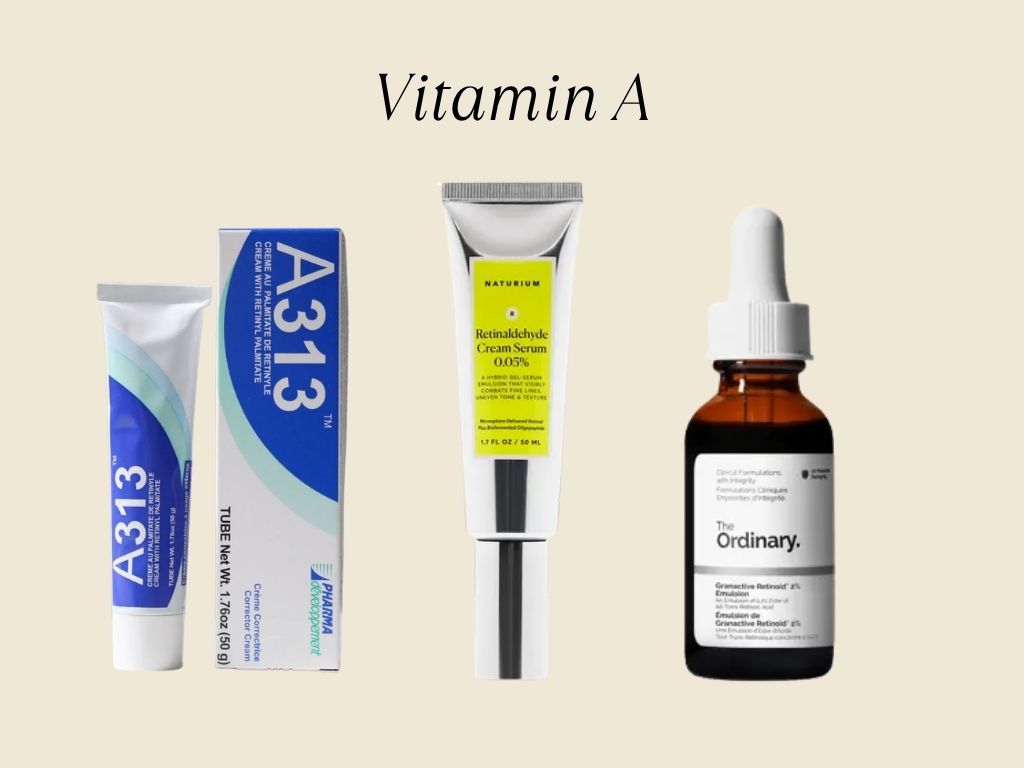
For the majority of skin concerns, introducing a vitamin A suited to your skin type is the long-term goal. It’s considered the gold standard, though it’s a slow process.
- Very dry, reactive, sensitive skin: A313 Vitamin A Retinol Pommade (I’ve done a full review of this, you can read more here)
- Beginners: The Ordinary Granactive Retinoid Emulsion 2% (start here, once you finish the bottle, level up!)
- Ready to jump in: Naturium Retinaldehyde Cream Serum 0.05% or The Ordinary Retinal 0.2% Emulsion
Starting a vitamin A, even a gentle one, is a bit of a process – but it’s one of the best things you can do for your skin long-term in terms of results (beyond sunscreen).
You can read a quick guide here on “How to Use Vitamin A Like a Pro!” or of course, comment below any questions.
Skin Checks And Sun Safety
Getting a Proper Skin Check
Skin checks are essential, especially in Australia, and I know a lot of you work outdoors. If you haven’t had a proper skin check with your doctor, that’s the best place to start for a baseline. They’ll have a specialist microscope to look at moles and spots clearly with proper measurements.
Know your spots – what they usually look like, whether they’re evolving over time. Pop it in your calendar to check your regulars every six months. If you have a history of melanoma or skin cancer in your family, find a GP that’s skin-check friendly.
Don’t get overwhelmed – do a quick self-check tonight if possible. The Cancer Council has a really good ABCDE guide. Snap pictures if you can. Check everywhere, including under your feet and under your nails. If you have a partner they can look at your back, or your doctor can.
The earlier you catch things, the less severe the intervention. A lot of skin cancers happen on the nose, forehead, lips, and around the eyes, which is where sun damage tends to occur the most severe.
Sun Safety Beyond Sunscreen
Sunscreen isn’t a miracle shield – you need all the steps of sun safety, and the most important is sun avoidance. Stay out of harsh midday UV hours. You can track UV on the SunSmart app.
When you are out: grab a bucket hat (Kmart has nice ones, Lack of Color if you want fancy) and sunnies that protect your eyes and the area around them – it’s hard to apply sunscreen very close to the eyes.
On vitamin D: if you’re low, chat to your doctor. Most doctors up with the research now recommend vitamin D supplementation over unprotected sun exposure. The incidental sun exposure you get even through all these protection steps is usually enough unless you’re severely deficient – and in that case you’d need supplementation anyway. This is not medical advice (obviously).
Men’s Body Care
Shower Basics
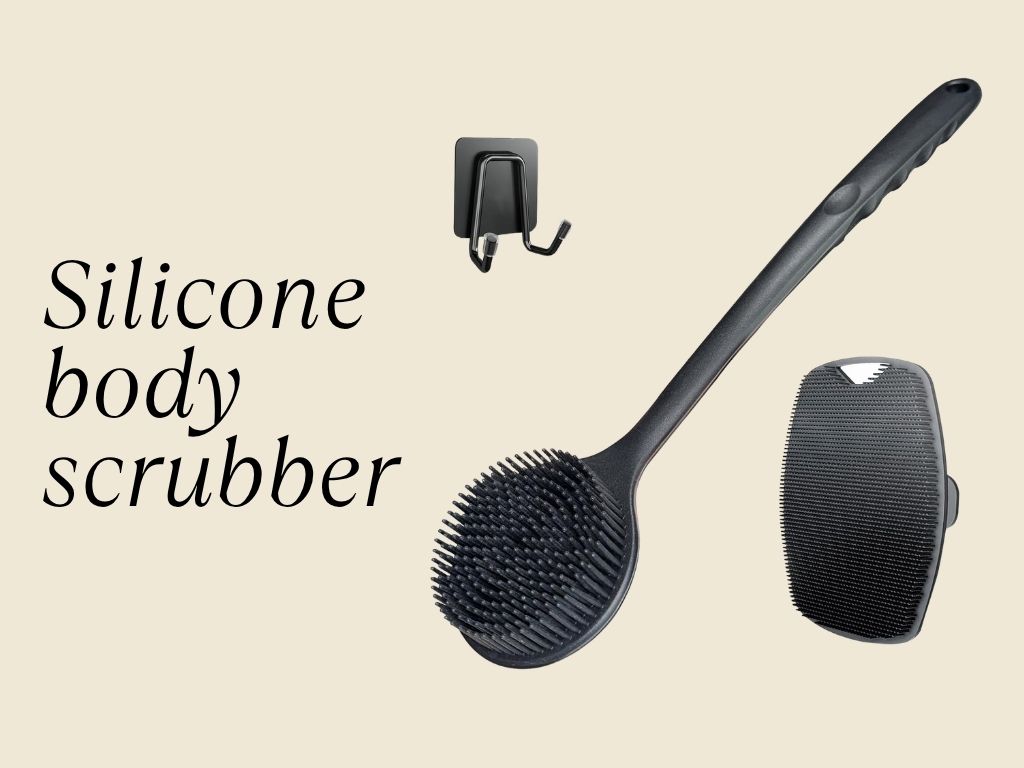
Use a foaming, gentle body wash that suits your skin type and a silicone body scrubber.
Loofahs are great if you use them well (always wash them, dry them well in the sun often), but they harbour bacteria – if you’re struggling with body acne, irritation, or eczema they can be too scratchy and transfer that bacteria around.
Silicone scrubbers are affordable, dry out well, don’t harbour bacteria, and are gentler on sensitive skin. You still get that lovely lather. Amazon has plenty, including ones that have a back attachment.
Check out this one: 3 in 1 Silicone Scrubber Set via Amazon
Spotty Back, Chest, Shoulders, Thighs
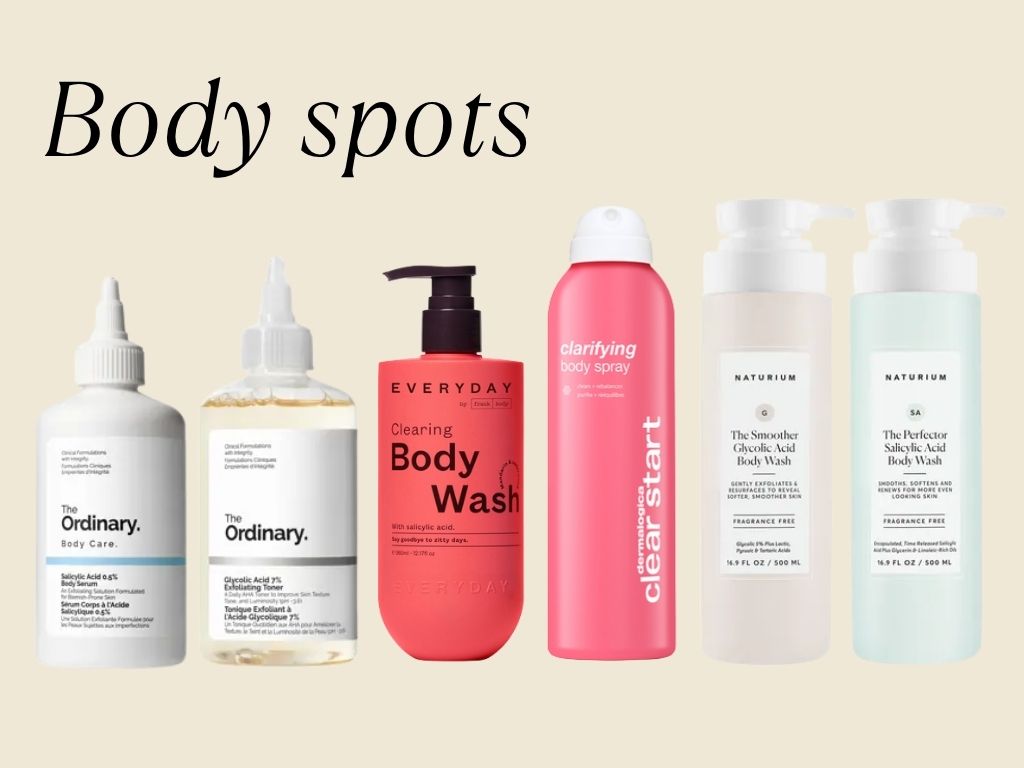
It depends what you have. If it looks like folliculitis, there’s some management at home.
Step one: apply an acid a few times a week before your shower. The Ordinary Glycolic is nice on the body and pretty cheap. Cover those areas.
Behavioural stuff that really helps body acne:
- Shower as soon as you can after gym or running
- Don’t re-wear gym clothes
- Wipe down gym machinery before use
- Let towels dry out completely between uses (chuck them on the line to bake in the sun)
- Be pedantic about how often you change towels and sheets, especially while playing catch-up
- When washing with body acne products, leave them on for a while after foaming – let them do their thing
If it’s severe, talk to your doctor. Body acne gets out of hand fast.
Products worth trying if the above doesn’t help:
- Body wash to use a few days a week, leave for a min or two after lathering: Everyday by Frank Body Clearing Body Wash, Naturium The Perfector Salicylic Acid Body Wash, or The Smoother Glycolic Acid Body Wash
- Body spray (yes I’m on the hunt for one that isn’t pink! But this is the best one I’ve used currently): Clear Start by Dermalogica Clarifying Body Spray
- Toners you can use on the body (and face!): The Ordinary Glycolic Acid 7% Exfoliating Toner or The Ordinary Salicylic Acid 0.5% Body Serum
Ashy or Dry Skin

Apply your body moisturiser as soon as you can out of the shower – not to wet skin, but while still damp and a bit waterlogged. This locks everything in and avoids trans-epidermal water loss (when damp skin loses moisture – a big cause of dry, irritated skin).
If you have significant dry patches or flaking, after moisturiser you can lock in another layer of something occlusive. If your skin is weeping or bleeding, that’s a conversation with a medical professional.
Go to picks (you can’t really go wrong with a basic body lotion)
- Good if you get keratosis pilaris “chicken skin”: Aveeno Skin Renewal Smoothing Fragrance Free Body Lotion
- Purplish discolouration / uneven skin tone: Vaseline Gluta-Hya Serum Boost Lotion Flawless Glow
- A standard catch all pick: Aveeno Daily Moisturising Fragrance Free Body Lotion
- Very dry skin: Vaseline Dry Skin Rescue Body Lotion
- A nice vaseline alternative for extra dry spots, best used over a lotion to “lock” everything in: CeraVe Advanced Repair Balm
Body Hair
Regardless of preference, trim body hair in areas staying damp or smelly or giving you issues – underarms, chest, back (if you get folliculitis), bottom, and groin. You don’t want moisture or odour trapped in, but there’s no need to shave to the skin. Trimming is fine and avoids ingrowns!
Bidet or Dude Wipes
If you’re on the fence and have anything recurring, consider a bidet (just a hose one) for after the bathroom, or keep a pack of dude wipes (don’t flush them, chuck in the bin). Helps the groin area stay less irritated and keeps you hygienic between showers.
Body Odour, Deodorant, And Antiperspirant
The Odour Basics
Trimming body hair is one of the best things for fighting persistent odour – not shaving down to the skin (that causes irritation), just trimming.
Apply deodorant after showering immediately, even if you shower at night – it gives the deodorant more time to work.
For persistent odour: use an acid under your arms or on your feet once a week. Feet can build up calluses that hold onto bacteria which causes smell. Pop the acid on about 10 minutes before a shower.
Picking a Deodorant
The best deodorant is one that works for you. I like a roll-on with a spray to top up if needed. If you have any odour by the end of the day, don’t mess around with gentle or natural options – go straight to clinical strength.
I use a clinical strength men’s deodorant and it works a treat. I like the Rexona one, but a lot of people swear by Mitchum. Find a format that feels good.
Cologne And Fragrance
Cologne is an extra bonus, but I really enjoy it – near zero effort and makes someone smell good and feel like they care about how they’re presenting.
How to shop for fragrance: go into Chemist Warehouse or Zara, spray one or two scents on your skin, leave, come back later to see how it wears and how the odour develops throughout the day.
It’s not a hard rule, but if you like your fragrances, a day scent that’s more muted and a night scent that’s more intense and romantic is a nice split.
You don’t need to spend a lot for something great with good longevity. If you have fragrance recommendations you swear by, share them in the comments – I think cologne really elevates someone and their presence.
Hair Care, Beard Care, And Styling

Shampoo And Conditioner
Most guys are fine with just a standard shampoo and might not need conditioner.
If you use styling products, double cleanse with shampoo once or twice a week to get out buildup – you don’t want your scalp holding onto product or excess sebum, which causes odour and more sweat.
If you have thicker hair you might appreciate conditioner.
Dandruff, Flaking, Seborrheic Dermatitis
Don’t waste time with anything fancy – go straight to a 2% ketoconazole shampoo from the pharmacy (Nizoral 2% Anti-Dandruff Treatment, about $20). Lather gently but well. Leave in for about two minutes.
Some people need it every shower, some just once a week – depends on severity. If you have flaking in your beard, this can help too.
Scalp Health And Preventing Hair Loss
I spoke with Dr Leona (follow her on Instagram if you’d like to see hair insights).
For general scalp health and preventing unnecessary hair loss, she recommends washing daily or every other day.
You want to reduce inflammation and irritation on the scalp – no constant dandruff, flare-ups, or sebum buildup. Conditions like seborrheic dermatitis are exacerbated by buildup and moisture.
For very early hair loss and prevention: focus on scalp health first, then consider stimulating growth shampoos (Dercos has one, the Energising Stimulator Shampoo).
Next step: speak to your pharmacist about whether topical minoxidil is right for you. If there’s no improvement, talk to your GP about other options.
Stay clear of trends like rosemary oils or leaving anti-dandruff shampoo on for hair loss prevention – they can dry out the scalp and cause unnecessary irritation.
Any sebum buildup can exacerbate scalp concerns. Hair loss is largely genetic – you’re buying time by keeping scalp and hair quality as healthy as possible. Chat to your GP.
Beard Care
Quick tips!
Wash the skin under your beard every day if you can, or every second day.
The skin and sebum there builds up and when it stays moist, it’s a perfect environment for things to go funny.
Get the area dry after washing (towel dry well or let your beard get ample air, don’t go to sleep with a wet, waterlogged beard – that’ll really stress the skin).
Styling at Home
Matte wax tends to work best, but it depends on hair density and type. Styling isn’t essential but can benefit specific hairstyles.
Not exactly my wheelhouse, but:
- Warm up the product in your hands first
- Use less than you think (you can always add more)
- Lean towards a matte finish over shiny
Nail And Hand Care
Nail Hygiene
Nails are an easy win. Trim regularly – you don’t want to see too much of the quick. Push cuticles down in the shower while skin is soft and malleable.
After trimming, run a file over to dull the edges so they’re not sharp or pointed.
Do this twice a month depending on nail growth.
- This set looks cute and has all the essentials: Manicure Set Nail Clippers Pedicure Kit
Hand Care
If your hands are dry, sensitive, or flaking, use a soap-free option for hand washing. You still get clean but it won’t strip moisture, and any soap reactions or allergies get sorted.
I buy a big tub of body wash (I like the DermaVeen Extra Hydration Gentle Soap Free Wash) and fill my soap dispensers with it. The Ego QV Ceramides Cleanser also works well.
For hand cream, you don’t need a dedicated one – use your body lotion or leftover face moisturiser. The idea is not to leave hands wet for too long (trans-epidermal water loss again).
Quick picks for hand cream:
- For very sensitive, ouchie hands: La Roche-Posay Cicaplast Hand Cream, check out a review of that hand cream here
- Normal hands, occasional dryness: QV Hand Cream
The Steps (Order) of Skincare With Instructions
Here’s a quick run-through of every possible step. You don’t need all of them.
Morning:
- Cleanse (to get off overnight sweat/sebum) – Apply a 10c amount to your face, massage around for 20 seconds, then rinse clean
- Targeted serum – Apply 2-3 drops and press into the skin
- Hydrating toner – Apply a 5c amount and pat into the skin
- Moisturiser – Gently rub a 5c amount into the skin
- Sunscreen (essential) – Generously apply a 1/4 teaspoon to your face evenly
Night:
- Micellar water – Use 4-5 drops on a cotton round then swipe over the skin to remove debris
- Oil / balm cleanser – Massage on dry skin to melt down, add a splash of water to emulsify, then rinse clean with water
- Foam-based cleanser (essential) – Apply a 10c amount to hands, add water and lather, apply to skin, cleanse for 60 seconds
- Targeted serum – Apply 2-3 drops and press into the skin
- Hydrating toner – Apply a 5c amount and pat into the skin
- Exfoliating toner – A few nights a week, not on the same night as other “actives” like exfoliants, swipe over the skin gently
- Vitamin A – A few nights a week, not on the same night as other “actives”, apply a pea sized amount to the skin, avoiding the eye area
- Moisturiser (essential) – Gently rub a 5c amount into the skin
- Barrier cream – Warm up a pea sized amount in your finger tips, press into the skin
- Oil – Apply 2-3 drops and press into the skin
Related Reading
- My Updated Skincare Routine For Men: What I’m Using to Future-Proof My Skin Before 30
- My Easy Skincare Routine For Men That Doesn’t Make my Girlfriend Cringe
- Damaged Skin Barrier: Signs, Causes, And How to Repair It (2026)
Frequently Asked Questions
Any questions not answered here? Comment below and I’ll add them to this list.
How do I do skincare with a beard?
Take extra care washing around that area and rinsing out soap. While damp, it doesn’t hurt to run the leftover moisturiser from your face over it. If in doubt, skip that area and focus on non-drying cleansing.
I have chronic chest and back acne – how do I clear it?
Thanks for your question. Body acne is really tricky and really annoying. It gets way more irritated and inflamed thanks to constant rubbing of clothing, sweat, and hard-to-reach areas – all things that fuel acne. The bacteria spreads easily because of clothing.
It depends what “chronic” means. If it’s cystic, everywhere, and feels like it’ll never go away, seeing a dermatologist might sort it long-term – which is ultimately the goal.
That said, have you tried the usual stuff? There’s a chance it’s folliculitis if you have red dots that are really persistent.
At-home steps to try:
- Exfoliating body wash in the shower (Frank Body Clearing Body Wash, leave on 2+ minutes)
- Exfoliating spray (I like the Dermalogica Clear Start one – on the hunt for one that isn’t bright pink)
- Be really on top of it, consistently
- Use a silicone body scrubber (any from Amazon – they don’t hold bacteria and don’t irritate skin)
- Wash for longer than you think
A lot of guys struggle with this because they have thicker hair – easier for things to get trapped in the follicle. Be consistent with body exfoliation in the shower.
Dandruff – how do I moisturise my skull?
Start with Nizoral 2% Anti-Dandruff Treatment (about $20). Leave it in for about two minutes so it can do its thing, then rinse out. If you’re still having issues there are next steps, but hopefully this sorts everything – it’s kind of the best kept secret.
I’m a late-thirties Aussie who looks chopped from years outdoors without sunscreen. What’s a good general routine?
How exciting that you’re getting into skincare! It’s probably not as bad as you think, but you’re right about sunscreen. You can start really late and still get great results.
First: have you done a skin check lately? Cancer Council skin check guide. Any spots you’re unsure of, show your GP. This happens to guys who work outside in peak UV a lot, and it’s way more important than any skincare.
Basic routine:
- AM: sunscreen
- PM: cleanse for 60 seconds, moisturise
To level up once the basics are down:
- AM: gentle cleanse > serum targeting concerns > sunscreen
- PM: cleanse for 60 seconds > serum targeting concerns > moisturiser (doesn’t have to be a “night cream”)
Quick picks for your routine:
- Cleanser: CeraVe Cream to Foam (looks a lot like their hydrating cleanser – they’re different)
- Serum: The Ordinary 5% Niacinamide (says face and body, time to use on the face)
- Moisturiser for drier skin: CeraVe in the tub (it’s thick)
- Moisturiser for oily skin: The Ordinary Natural Moisturizing Factors Beta Glucan
These might not work for you specifically – depends on skin type. But please do a skin check ASAP.
I get chin acne. I use SA cleanser but it’s not helping. I think it’s caused by milk and whey protein but I don’t want to give them up. M21
Is it just on your chin or around your mouth going up to your upper lip? Google perioral dermatitis – if that’s what it is, exfoliating makes it worse.
If it is acne or spots (could be more hormonal given you’re young and still having skin changes), I’d actually use azelaic acid. Build up to nightly, start twice a week at night, with a restorative, hydrating routine. Use the SA cleanser two nights a week and a more normal cleanser the rest of the time.
There’s a really good acne-prone cleanser from Dermal Therapy that isn’t stripping – their whole acne-prone range is good and affordable. There’s a trial kit if you don’t want to commit to full sizes.
If you’re not using sunscreen, that’s essential. A good starting point is the Cancer Council Face Day Wear Matte.
Quick picks for your routine:
- Azelaic acid: The Ordinary Azelaic Acid Suspension 10%
- Face wash: Dermal Therapy Acne Control Wash
- Moisturiser: Dermal Therapy Acne Control Lotion
- SPF: Cancer Council Face Day Wear Matte SPF50+
Is there a specific food that helps skin?
A balanced diet is a good starting point. Beyond that, omega-3s (fish), vitamin C (veggies), and nutrient-dense whole foods are fantastic – the whole “eat the rainbow” thing. But this is a bit out of my wheelhouse.
Best affordable soap alternatives for sensitive skin?
Anything from Dermaveen – usually on sale. That’s what I use for body wash because my body skin is very sensitive. Dermal Therapy also has good sensitive washes, and you can use these on your face with no issue.
How often should I wash my hair to avoid dandruff and slow hair loss?
For dandruff, start with Nizoral 2% Anti-Dandruff Treatment. You’ll have to test how often you need it.
As long as you’re gentle with your scalp, washing shouldn’t cause hair loss. In fact, sebum holds DHT, which is what actually causes hair loss – so not washing can potentially exacerbate it. Worth searching more on this.
Is sunscreen still helpful if I didn’t start early?
Absolutely. There’s a well-known case of a woman who started using sunscreen at 52 on her face – by 92 the difference between her face and her neck was huge. Even starting at 52 gave those results.
If you’re overwhelmed by skincare, totally get it. Just start with sunscreen. Use your body wash to wash your face like you probably already do, but add sunscreen in the daytime and it’ll make a huge difference – plus protect you from skin cancer.
How can I persuade a recalcitrant teenager to wash?
Washing the body or washing the face? Are they having other behavioural challenges or showing signs of withdrawal? One of the best ways is to get them involved – take them shopping to pick out a deodorant and skincare routine they like, maybe gift it to them. Make it really easy.
I have a huge heart for teens – depression, changing body, changing hormones, it’s very difficult.
Depends on the character:
- For some mums, it helps to just get the stuff and put it in their room or shower without mentioning it
- For others, bringing them along and involving them works
- For others, a gift card to somewhere
- Sometimes involving them in your routine, or announcing when you wear deodorant
I’ve heard it’s sometimes helpful to literally incentivise correct hygiene with little goals. Depends where the teen is at. Do your best not to shame them. Mentioning that it’s one of the easiest ways to make sure people treat them better and like them can help – unfortunately we live in a society where smelling nice and being clean takes you 90% of the way there.
Isn’t the lack of sun more deadly than sun exposure? Vitamin D is so important.
I appreciate the suggestion. There is nuance needed, but two in three Australians will get skin cancer in their lifetime. Though many forms aren’t lethal, some are – and this is especially relevant for tradie guys who are outside in peak UV and maybe not great with sunscreen application. The non-lethal ones can still be extremely disfiguring.
It’s actually a myth that being in the sun is the solution to low vitamin D. Vitamin D is extremely important, but most doctors up with the research say supplementing is way more important – because the risk associated with sun exposure in Australia is so great. Of course, this is a conversation best had with your doc.
Incidental sun exposure (which happens even when wearing sunscreen and avoiding peak sun) is usually ample for vitamin D. Enjoying the sun safely out of peak UV with sun protection is totally fine – as in the 10 minutes walking to your car in the morning.
Will showering twice a day wreck my skin?
Only if:
- You have a compromised skin barrier
- You’ve got redness
- You’ve got active blemishes and irritation
- Something is already causing an issue
If you’re showering twice a day with no side effects or skin concerns, keep going – you’re fine. This becomes an issue if you’re using very stripping soaps that constantly strip your natural oils, leaving your skin compromised.
If I have something I’m unhappy with (blemish, scar, etc), what’s the order of personal care before getting outside help? Is a GP the first port of call?
Get the skincare basics at home first – depends on severity. If it’s not distressing and you’re happy to give a core routine a go, do that first.
If you’re experiencing scarring, chat with your pharmacist. Many pharmacists recommend azelaic acid or Finacea (also available as a brand called Azclear) as a first step – labelled to treat acne and rosacea, and many people find it very effective.
Escalation path: pharmacist > GP > GP refers to dermatologist for other options.
What’s the difference between a dermal therapist and a dermatologist?
Both have studied. Dermatologists are doctors – specialists. They deal with serious conditions like eczema, skin cancer removal, and prescription treatments for severe acne and rosacea. Dermal therapists can’t prescribe but are trained in skin health (experiences with both vary).
Dermal therapists do skin peels, lasers, microneedling – helping your skin over time across many sessions.
For removal of anything serious or cosmetic, go to a dermatologist. Mole removal, anything around the eyes – dermatologist. Exception: some doctors can remove skin tags and cherry angiomas in-office depending on Medicare. Some aesthetic clinics can do basic skin tag and mole zapping depending on size.
Is sunlight actually good for my skin?
Depends what you’re after. Some sun exposure is nice as long as it’s out of peak UV and you’re sun safe. You get plenty of incidental exposure even with sunscreen and long sleeves.
People claim sunlight is good for acne – that’s probably UV tightening up skin and giving pigment that covers blemishes. Short-term maybe, but longer-term it causes much more skin damage. Classic “came home from the beach and my body blemishes look better” – but it’s short-term gain that compromises skin long-term. If you want the beneficial light rays without damage, look into a sunlight LED mask.
What’s the best way to use azelaic acid – spot treatment or all over?
Depends on your goals. Blemishes all over or just the odd spot?
Someone like me who gets blemishes all over – I use it all over my face. But some formulas are prone to pilling.
If you struggle with short-term itchiness azelaic can cause, have hypersensitive skin, or find applying it all over difficult – just on the spot is fine.
If you want the prevention aspect, using it all over means it can actually prevent, rather than just treat what’s already erupted.
Do I need to moisturise as much when I have facial hair, or does the natural oil handle it?
With beard care, focus on moisturising skin you can see and cleansing the beard hair when cleansing your face. That area usually does a good job of staying moisturised as long as it has meaningful dry time between cleanses – you’re not leaving it damp or wet.
Where hair grows tends to have more sebum production, so you’re right that the natural oil sustains that skin. If you’re experiencing drying and flaking from daily cleansing, run the excess moisturiser left on your hands gently through your beard.
Should I change my skincare routine in winter? Heavier moisturiser?
No hard and fast rule. Many people find their skin gets dry and irritated during winter, especially with more significant skin concerns. A heavier moisturiser is a nice way around that. Some find adding a hydrating milky toner gives their moisturiser the extra boost it needs.
If your skin is peeling, flaking, extra sensitive, or red – something heavier and more nourishing in winter is the way.
Regardless of season: apply moisturiser when your skin is still wet. Don’t let your skin dry out after the shower – applying to damp skin gives you way more bang for your buck in spreadability and results.
What’s a good exfoliant and how often should I use it?
Depends on the concern.
Blackheads or enlarged pores: a Salicylic Acid, usually in a toner format, is a good start. Affordable options are easy to find. Start two nights a week. For thicker skin and acne, you can build up to four nights a week.
Overall dullness and some flaking: focus on moisture first. Some hydrating toners also gently exfoliate.
Just dullness and leftover spots (if skin can handle it): classic glycolic or AHA-based exfoliants. Start two nights a week and see how you go.

Leave a Reply