

Creating a strong influencer (or content creator) media kit is one of the most important – and often most confusing – steps when pitching yourself to brands.
I’m Minnie, a full-time content creator, and over the past five years I’ve made more media kit mistakes than I care to admit (but do, in this article).
Although they had their fair share of very questionable fonts and lots of information overload, each version taught me something new about what brands actually want to see.
I’m sharing every media kit I’ve used since 2020 with plenty of media kit examples so you can learn from my wins, my blunders, and avoid making the same mistakes when building your own.
Why Media Kits Matter For Influencers And Content Creators

Before I discovered Canva or had a clear pitching process, brand contact happened through Instagram DMs or loose email threads. Looking back, I wish I’d created a media kit much earlier – even with minimal content.
Having a media kit brings lots of clarity to the conversation, and helps show brands credibility. It’s important to make it easy for brands to understand who you are and how to work with you, and that people trust and work with you – also known as social proof.
In many ways, a media kit is a resume.
My Very First Media Kit – What I Got Right And Wrong (2020)

My first media kit was humble, basic, and created before I had any real design skills (pre Canva!).
What Worked
- A solid “about me” blurb that carried through future kits
- Showing previous brand engagements (PR send-outs at the time, I hadn’t worked paid with anyone yet)
- Including a photo of myself that was the same as my profile picture
What Didn’t
- Comic Sans-style font. This is considered unprofessional, so give any hand writing font a miss unless it’s identifiable to your personal brand.
- Not saving or sending it as a PDF. Do not send your media kit as an image or a non-common file type. I’m cringing looking back, and when I was on the hunt for this version of my media kit I stumbled across an email of someone not being able to open it because of the file format.
- The layout wasn’t clear and the demographics weren’t displayed well. Eg: Impressions are noted – but impressions over how long? 30 days, or 3 months?
This was the turning point where feedback from someone in the industry helped shape everything that followed.
Here’s a reminder to ask for help, and send your media kit to your peers that are supportive. Be respectful of their time, and find a way to say thank you.
A second set of eyes help a lot.
When More Information Isn’t Better. My Media Kit Lessons From 2021
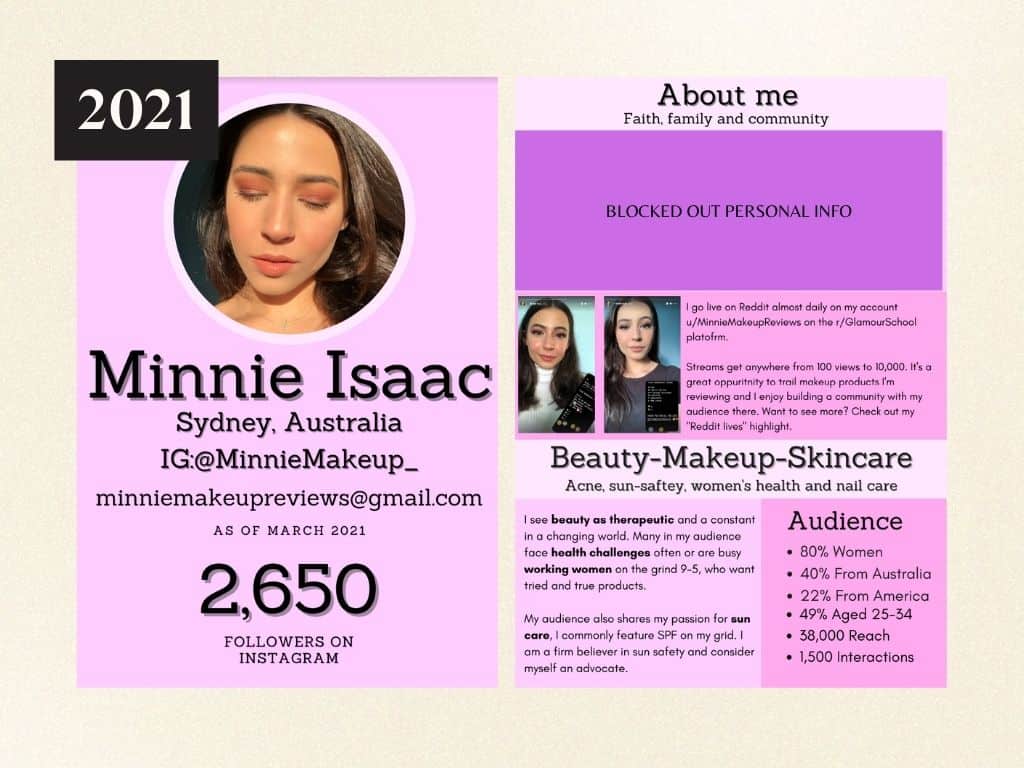

My second media kit leaned heavily into colour (that really wasn’t apart of my personal brand…so not sure what possessed me to go overboard with the purple) and lots of over-explaining.
What Worked
- A separate rate card (still a good practice)
- Strong imagery. This was before reels.
What Didn’t
- Information overload. Having that much personal information isn’t considered professional (referring to the faith, family, and community part blocked out).
- Overly long brand lists. The “Brands I’ve worked with” list is too long. Stick to a handful of brands that are the most recognisable
- Unnecessary explanations brands don’t need at this stage. “My work & personal style” section doesn’t need to be there. The content on your socials needs to be enough to convey this.
- Unless purple is an integral part of your personality, probably refrain from using this much.
- Four pages is overboard for the context. This will change depending on scope, and what content you’re creating however.
At the time, I thought more detail meant more professionalism, and might help brands understand my platform better. Clarity matters much more.
Brands and PR agencies will reach out depending on a few factors including existing relationships, and will (to some extent) be familiar with your work style based on your social account’s content.
Why I Invested In Professional Help For My Media Kit
Realising I needed guidance, I paid for a professional account health check. That investment helped beyond belief.
The key takeaway was simple: A two-page media kit, updated regularly, with:
- A clear introduction that’s short and sharp.
- Easy-to-read insights. Don’t leave anyone guessing what lines up where.
- Clean spacing, less clutter.
- Minimal but relevant information
- Story views are important. Brands want to know how many people are tuning in.
That structure became the foundation for my most effective media kits. I also paid the social media specialist for an example to be made for me to use as a template, shown below.
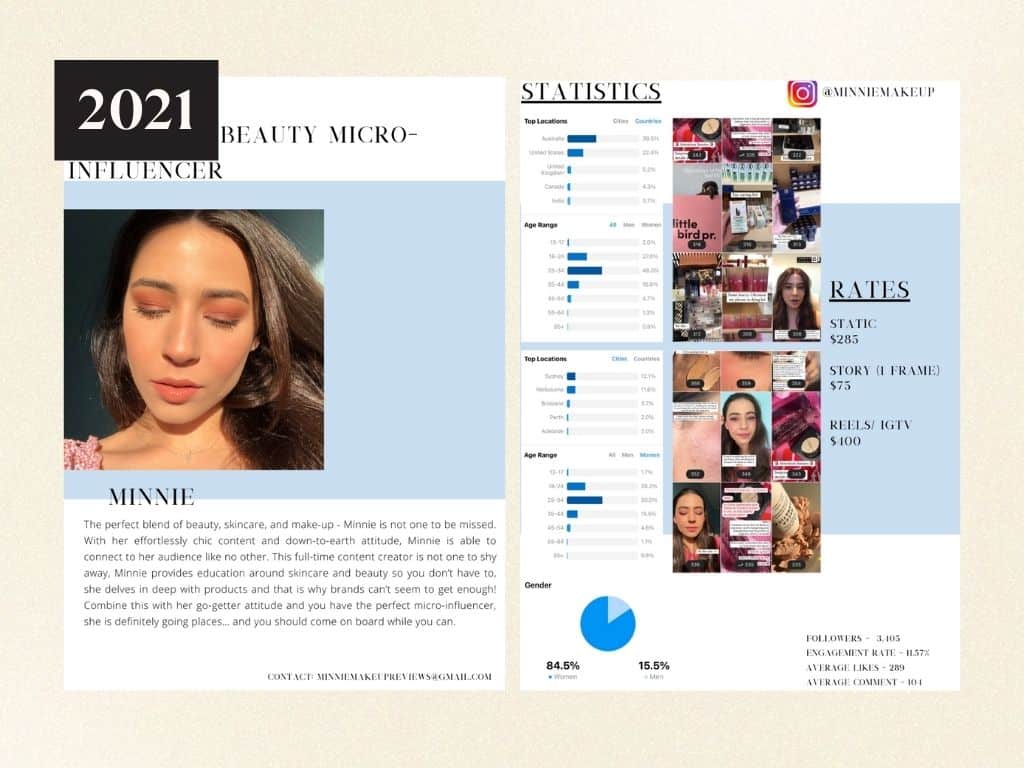
Using the template and structure given, I created the below more in line with the personal branding and style my account had at the time.
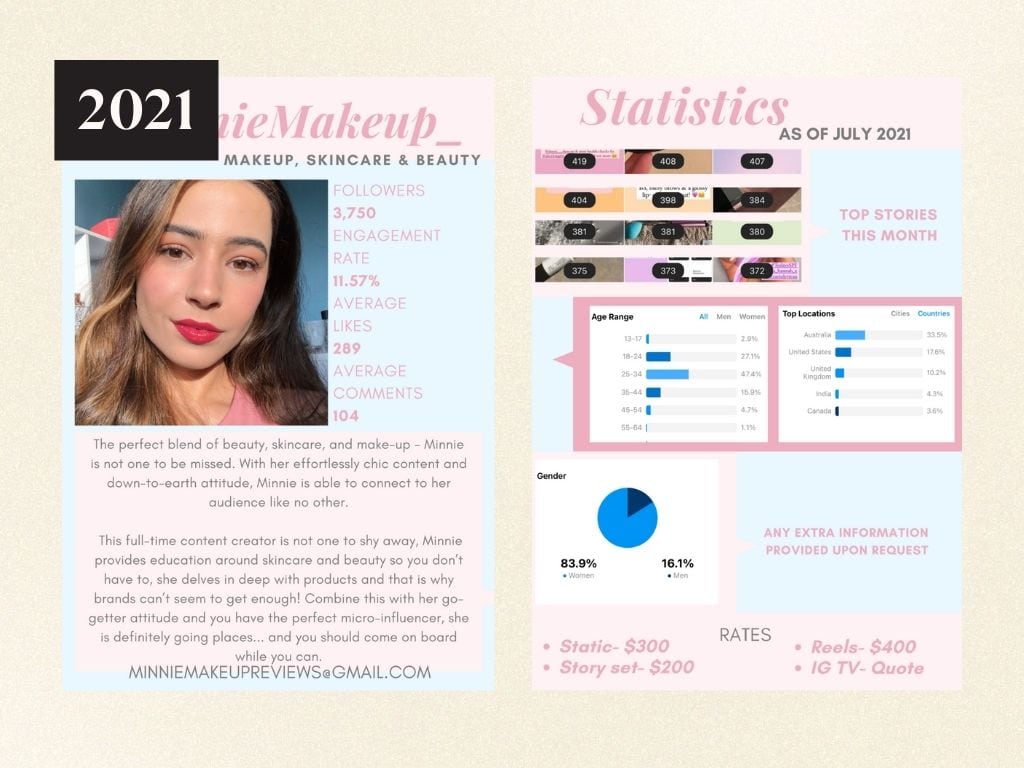
Although updating your media kit often is important, keeping to a personal brand is extremely essential, which is why I now (in 2025) align my branding consistently, so I’m not jumping around like in the earlier years.
My Media Kit In 2022 And 2023

This version above did most of the heavy lifting in my career and relationship building with lots of the brands I still work with today.
What Worked
- Clear insights and graphs
- On-brand colour scheme
- Ad usage information
- Shortened brand lists
What Didn’t
- Including rates directly in the media kit. It’s great to have this as a separate opt in.
- Over-explaining deliverables. Always go for short and sweet
My Media Kit In 2023

This media kit reflects the work I do now and the brand I’ve built. It’s clean, easy to read, and designed to evolve as my work does.
As a rule of thumb: make everything you send as easy to read as possible. Although the font was on brand for me, it might be difficult to read for some.
T&C’s need to be in any contract you have with brands, rather than on rate cards or media kits. You can have rules for engagement guidelines where appropriate, typically best in the email body.
Read: The Way You’re Emailing Is Making You Look Unprofessional. Here’s What you Need to Know
My Current Media Kit (2024-2025)

I’m always open to feedback on my current media kit, but there are a few things I genuinely like about how it’s evolved.
A big priority for me was showing the lighting quality I can achieve in my content. Some brands strongly prefer LED lighting, while others are very specific about natural light, so I wanted to visually demonstrate that I’m comfortable and capable with both.
Read: Content Creation Tools Under $50 on Amazon That Will Up Your Content Game Overnight.
I also wanted brands to immediately understand the quality of my work – that I’m confident on camera, that my production value is strong, and that my reels can perform organically.
As the industry continues to shift towards results-based content, performance matters more than ever, and I wanted that reflected clearly.
That said, while media kits are still extremely important, I don’t think they should be overvalued.
Your grid should act as an extension of your media kit. This is why I always encourage creators to pin examples of themselves speaking to camera or sharing high-quality content that clearly showcases camera quality, audio clarity, and overall production standards.
At the end of the day, the most important thing you can show a brand is the quality of content you can actually create and how engaging that is to a relevant audience.
What works with my current media kit
- Clear insights. I ditched the graphs just from preference and ease of updating
- Imagery examples and content standard
- Engagement rate showing
- Recognisable brands
- Short and sweet
Important Lessons For Influencers Creating Their First Media Kit
I entered the beauty industry as a complete outsider and learnt as I went. If you’re reading this article, you might be in a similar boat.
Everything I learned came from research, asking questions, and investing in mentorship. Fingers crossed this walk through was helpful.
Although everyone’s journey is different, I can’t stress the importance of seeking out information, taking the time to learn, paying for expertise (where appropriate), and most importantly, respecting people’s time and support when building your career.
Feel welcome to ask questions below, regardless of how gritty.
Thank you for reading. You can find me posting on Instagram @MinnieIsaac_, feel welcome to follow along there.
If you’d like a step by step guide about how to create a media kit, check out: How to Make a Stand-Out Media Kit for Content Creators (With Free Templates).