

This article contains affiliate links. If you buy through one, we may earn a small commission at no extra cost to you. It never changes what we recommend.
Disclaimer: This article is based on personal experience and is not medical advice. Tretinoin is a prescription product— always follow your doctor’s guidance before starting or changing treatment. White Rabbit Social has no affiliation with any prescription brands.
In most countries, tretinoin (often shortened to “tret”) is a prescription ingredient and is used most commonly for the treatment of acne. It can also be used to treat various other skin concerns such as sun damage and fine lines/wrinkles.
I started to use Tretinoin for three main reasons:
- Although I haven’t experienced severe and chronic acne, the breakouts I had were usually quite large and frequent enough to bother me.
- The extra “anti-aging” and skin smoothing benefits sounded appealing.
- The price point, at least here in Australia, is pretty much equal to or below cosmetic retinoid options. And all other retinoids are trying to be tretinoin, so why not just go straight to the source.
My Tretinoin Experience: The Good, the Bad, and the Flaking
The beginning was flawless. I used it daily, as per instructions, for probably a week, with no sign of sensitivity or irritation. In my mind, I had dodged a bullet. I was one of the lucky ones.
And then, BOOM. My skin started peeling, flaking, I was red, sore, irritation was peaking. It was like I woke up one day and my skin was well and truly protesting this tretinoin assault I’d put it through. I had to stop using it entirely.
A few weeks later, after I felt my skin was relatively back to normal, I started the whole process again. Only this time, I applied it once every 4 days or so.
The irritation did not disappear, but the flaking was minimal enough to not be too noticeable and my skin wasn’t quite so bothered and red. Still annoying, but manageable.
Tretinoin Purging and Results: My Month-by-Month Timeline

Image: My tret timeline at a glance.
Month 1: Intense Purging
Intense purging, I had very large and painful breakouts show up and I experienced lots of peeling and flaking. My skin was extremely sensitized.
Month 2–6: Slowly Adjusting
Probably around the 8 week mark, I started to feel like my skin wasn’t purging as much. I had also started to increase usage to every 3rd night. Flaking wasn’t as frequent, but I still felt that my skin was very sensitized.
Month 6: Building Tolerance
I started to feel more “normal” and could begin playing around with other skincare products a little more often. Things like gentle acids, vitamin c derivatives etc. were now okay to use.
Month 9: Visible Improvements
Around this time is when I felt like I was starting to see actual results. Breakouts weren’t really happening, and my skin texture had improved enough to where I was happy with the effort. Between month 6 and 9 I started testing daily use but always regretted it, and would drop back down to every 2nd or 3rd day.
Month 12: Stronger, Resilient Skin
This is about when I became happiest with the result, as beyond helping control my breakouts, I felt like my skin had strengthened. It just felt more resilient and I could better tolerate ingredients that used to cause me sensitivity.
Tretinoin Results After 3 Years
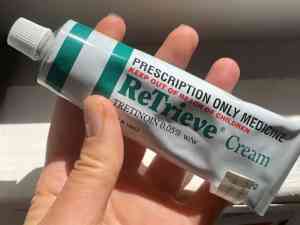
Image: ReTreieve, a common prescription tretinoin in Australia that comes at multiple strengths. Credit: Adore Beauty, Emily Algar
It’s around three years that I’ve been using tretinoin, however, I’ve had breaks in that time testing other retinoids.
Has my skin transformed in a way to where it’s perfect, looks airbrushed and smooth? Definitely not. I carry a lot of redness and congestion in my skin that I was hoping tretinoin would be more successful at solving. However, it has definitely helped more than anything else in controlling acne and making my skin feel the healthiest it has ever felt.
When I do have breakouts, they don’t test long, and my skin heals much better, with no massive signs of post inflammatory pigmentation or erythema.
TBH, if I were a more diligent patient of tretinoin, I think I would have even better results. But, I also have to be faithful to myself and admit that I enjoy using a wide range of skincare products, and I’m not really willing to let go of the experience in favour of potentially boosted results from tret.
Read: Everything I Learnt Trying Prescription Retinoids in My Skin Routine for the First Time
These days, I try to use tret 3–4 times a week. Sometimes I’ll still overwork my skin trialing too many products, in which case I pull back on tret and slot in a retinaldehyde product instead. This isn’t ideal, I think if you can just use tret, keep using tret.
Tretinoin vs Retinol: My Honest Comparison
I know there is a lot of discussion on social media discussing the retinoid pathway, and how retinol converts in the skin, and ultimately you achieve similar results. I don’t agree.
I used retinol for years, and although I had reasonable results, especially from the Skinceuticals products, absolutely nothing like what tretinoin delivered.
Read: Adapalene (Differin) vs tretinoin for anti-aging and acne
Maybe my skin is just more “active” and needs more help. Maybe if I had used retinol for a bit longer it would get me the results I wanted. Maybe retinaldehyde would have worked better for me back then. But, that’s a lot of maybe. And I kinda just want definitely.
Also, I find it a bit strange that the conversation around retinol is heavily focused on the theoretical action of retinol in the skin. That I guess has been shown in some studies or whatever. But, retinol or retinal, they’re still just cosmetic ingredients.
We have no way of knowing the stability or efficacy of a retinol containing product, is it “alive” in the bottle or jar, is it then going where it needs to go, and converting properly.
We’re at the mercy of skincare brands, who can never actually show us evidence of this, because if they could, their products would become drugs themselves.
How to Use Tretinoin, And What to Use With it

Image: Products to use with tret.
Tretinoin is always a product for night use, and I think at the beginning especially, it should be your only focus. Forget all other actives. Just focus on tret and SPF.
I was able to still keep using most hydrating ingredients like glycerin/hyaluronic acid, and even niacinamide was great to have.
The Hada Labo premium lotion was especially effective at helping me combat flaking and dryness, and I found slugging very useful, especially on the off nights.
Even now, I still slug, only I’ve moved to using b-balm most nights as it’s lighter and less suffocating than other options. I wish I had b-balm back when I started tret.
Shop: Hada Labo Gokujun Premium Hyaluronic Emulsion, $22.40
Shop: b-balm multi-purpose moisturizing gel-balm, $36.00
Shop: Eucerin Aquaphor Healing Skin Ointment Advanced Therapy, $16.72
Routine Example on Tretinoin Nights:
- In the evening, cleanse (try and wait for your skin to be dry)
- Apply tret
- Apply moisturiser
At the beginning of the process it can be useful to apply moisturiser underneath the tret so you create a “sandwich” effect. This is something that Dr. Ranella Hirsch has spoken about often.
I used to regularly do the “pizza” method, which is a layer of moisturiser, then tret on top. I found that to be the most gentle way of incorporating tret into my routine.
Tips for Tretinoin Beginners
- Tretinoin is an ingredient like anything else and the way it functions on your skin might be impacted by the type of formula too. Personally, using a micro gel version helped me A LOT with irritation and sensitivity. I can now use the cream version, but I still find it way more aggressive than the gel.
- Some places offer “compounded” creams, this is often what you’ll see from online service providers. These can vary even more and usually have very short expiration dates, but can also often be offered in combination with other ingredients.
- Dry skin really does rule. I waited a good 15–20 minutes after cleansing to ensure my skin was dry dry dry before applying tret. I’m not sure if there is direct science showing a dramatic improvement on tolerance, but I felt like it helped. It’s worth trying anyway to see for yourself.
- Using straight up Vaseline was a bit suffocating for me, especially over tret. So I preferred Aquaphor which is a bit more emollient. Now, I would just use b-balm.
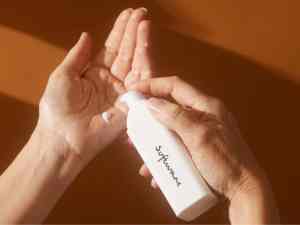
Image: Software skin is an example of a brand that compounds skincare. Read more here about compounding tret.
Is Tretinoin Worth It? Final Thoughts
Tretinoin is a brilliant ingredient. But, it is a medical ingredient for a reason. It will have the potential to cause side effects, like any other prescription or OTC drug. And you kinda have to be okay potentially experiencing that.
I think a medical condition like acne is probably always going to be best served by seeking out a medical product like tretinoin.
Tretinoin can be aggressive. It won’t be the right fit for everyone. Sometimes the side effects are too extreme that they impact quality of life in other ways. However, some people can use tretinoin with absolutely no issues.
My experience should not sway your decision, and another person’s experience shouldn’t really matter either. Take everything you see as a “potential” sequence of events. But nobody can predict how your skin will react.
If your skincare concerns are more around “anti-aging” and skin smoothing, tretinoin is maybe still worth a shot. But, it’s also maybe less important to stick with it if side effects are severe, cosmetic options are likely good enough in this regard.
Disclaimer
Remember, tretinoin is a medical product, so anything I’ve said here is just my experience. Always listen to your prescribing physician, and if I’ve said anything that contradicts their opinion, use what I’ve said as a discussion point, not actual medical advice.
A note from WRS: This article was shared with permission from the authors social profile. If you resonate with this creators content we highly encourage you to visit their profile and consider following and supporting them on their platform.
View this post on Instagram
Leave a Reply