

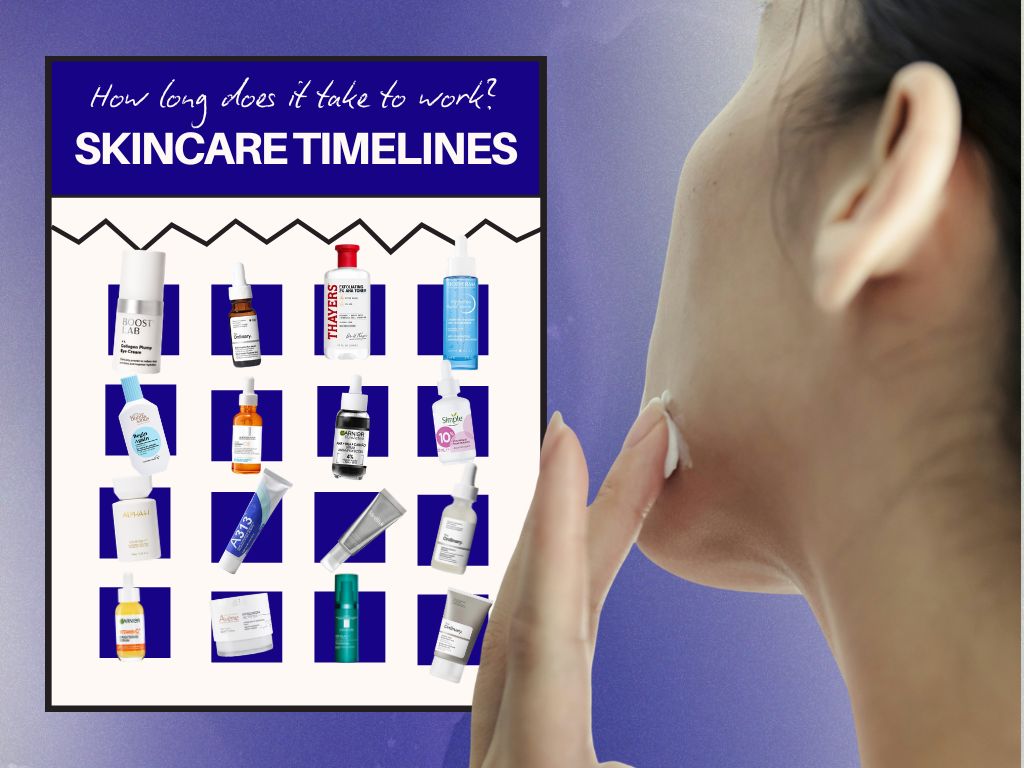
Quick Summary: Skincare timelines vary widely – hyaluronic acid immediately plumps skin, while retinol and peptides need 8-12 weeks. The skin’s renewal cycle takes 28-40 days, which means most products need at least one full cycle before results are visible. The most common mistake is switching products too soon.
How long does skincare take to work? The answer varies – anywhere from a few hours to 12 weeks, depending on the ingredient and what you’re trying to address.
Understanding how long different ingredients take to work can not only save you money chasing the next viral product, it’ll save you from making changes too soon and missing the results you were already on your way to seeing.
As formulas and routines get more layered and complex, there’s also much more to consider beyond single ingredient timelines alone, too.
Let’s jump in.
How Long Does Skincare Take to Work?

The answer of how quickly skincare provides visible results starts with your skin’s renewal cycle.
Skin cell turnover – the process of new cells forming and old ones shedding – takes around 28-40 days in most adults, and slows further with age.
Average Skin Cell Turnover by Age (Estimated)
- Teens: around 14-21 days
- 20s: around 21-28 days
- 30s: around 28-35 days
- 40s: around 35-42 days
- 50 and above: around 42-84 days
This means most products need at least one full cycle before you’ll see meaningful change, though many factors impact how our skin looks and feels.
As a general rule, if you haven’t given a product at least eight weeks of consistent use, you haven’t really given it a fair chance – though it’s important to stop earlier if you’re experiencing any negative reactions or allergies.
Read: Barrier Repair For Acne-Prone Skin: How to Repair Without The Congestion
What Factors Impact How Quickly Skincare Works?
Not all products – or results – are created equal, and a few key factors shape how quickly you’re likely to see a difference.
- Formulation plays a significant role. A product that combines multiple actives may deliver faster or broader results than a single-ingredient serum, though more ingredients working at once isn’t always an advantage.
- Concentration and pH matter just as much as the ingredient itself. A vitamin C serum at 5% will behave very differently to one at 20%, and AHAs only work well for your skin within a specific pH range. A well-formulated product at the right pH and concentration will outperform a poorly formulated one with a higher percentage every time.
- Penetration is another variable that often gets overlooked. Ingredients need to reach the right layer of skin to do their job – and not everything can. Molecule size and the delivery system used in the formulation all affect how deeply an active actually penetrates.
- The type of result you’re chasing also matters. Some ingredients produce surface-level effects quickly or work reduced redness, improved comfort, or a temporary plumping effect. These early wins are great, but they’re different from deeper changes like fading pigmentation or stimulating collagen.
Can You Speed Up Your Skin Cycle?
Exfoliation and vitamin A are the two most effective ways to speed up your skin cell turn over.
AHAs like glycolic and lactic acid dissolve the bonds between dead skin cells on the surface, encouraging faster shedding.
Vitamin A works differently but to similar effect. Rather than exfoliating the surface, it accelerates cell turnover from within, signalling skin to produce new cells more quickly.
This is part of why retinoids are considered one of the most evidence-backed ingredients in skincare as they’re not just treating concerns on the surface, the actual rate of skin renewal is changing.
Like with all actives, more is not more. Over-exfoliating disrupts the skin barrier and can actually slow your results.
The same applies to vitamin A – too much, too soon leads to irritation and barrier damage rather than faster renewal. If your skin feels tight, raw, or sensitised, pull back.
How Long Does It Take for Each Skincare Ingredient to Work?
Timelines vary significantly depending on the ingredient, its concentration, the formulation, and your skin type. Here’s what to realistically expect at a glance.
How Long Does Retinol Take to Work?

4-12 weeks for visible results; up to six months for significant change.
Retinoids – including retinol and prescription tretinoin – accelerate cell turnover and stimulate collagen production, making them one of the most well-researched “anti-ageing” and anti-acne ingredients available.
Most people notice smoother skin texture within four to six weeks.
Visible reduction in fine lines, dark spots, and breakouts typically takes 12 weeks or longer.
How strong your retinoid is will greatly impact how quickly or significantly results show up, but picking something stronger isn’t always the solution.
The first two to four weeks can involve purging, dryness, or flaking as skin adjusts.
This is normal and not a reason to stop, but might also be a hint to tweak use and implement some tips for best use when introducing vitamin A.
Quick Picks:
- CeraVe Resurfacing Retinol Serum, $44.99
- Avène Hyaluron Activ B3 Multi-Intensive Night Cream, $73.99
- A313 Vitamin A Pommade, $33.99
- Medik8 Crystal Retinal 3, $99.00
How Long Does Vitamin C Take to Work?
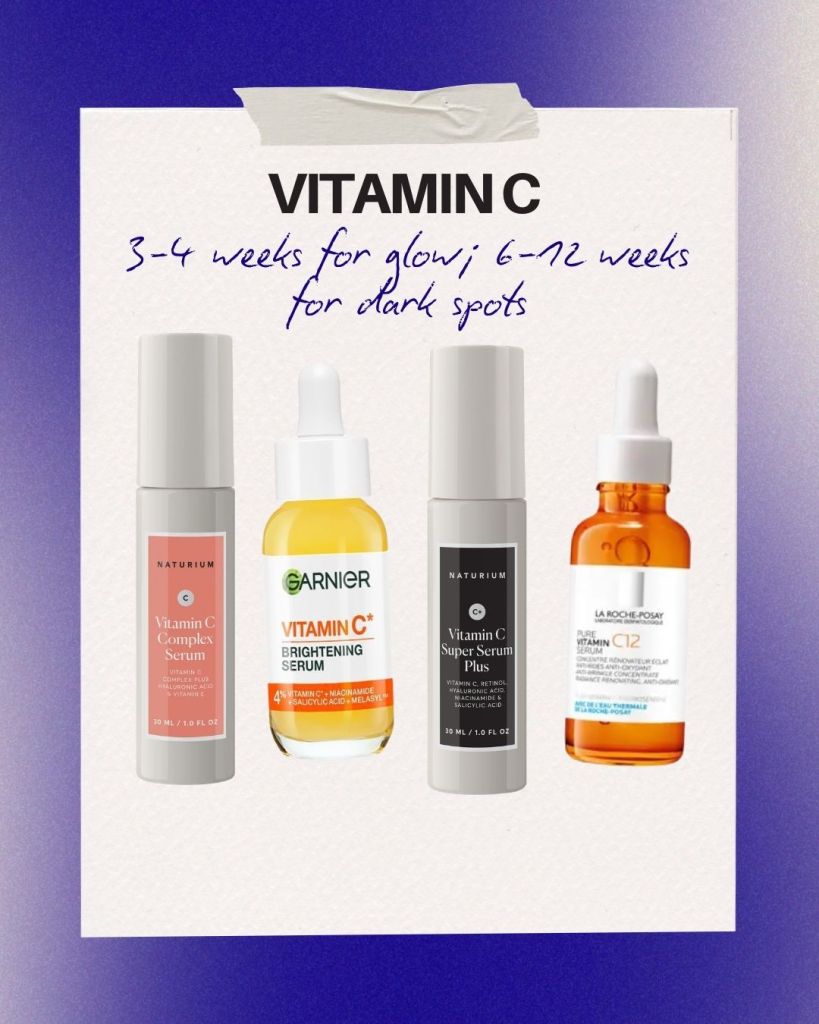
3-4 weeks for initial brightness; 6-12 weeks for dark spot fading.
Vitamin C is an antioxidant that brightens skin, fades hyperpigmentation, and supports collagen synthesis, though often best for sun spots rather than PIE/PIH.
Read: Klairs Freshly Juiced Vitamin Drop Review. “A Gentle Vitamin C for Sensitive Skin”
It’s one of the few ingredients where some people do notice an early glow – often within a few weeks – but for more significant evening of skin tone, you’re looking at a longer commitment.
Consistency and proper storage matter a lot here; vitamin C oxidises quickly and a degraded product won’t deliver results.
Quick Picks:
- Naturium Vitamin C Complex Serum, $39.00
- Garnier Vitamin C Brightening Serum, $36.99
- Naturium Vitamin C Super Serum Plus, $49.00
- La Roche-Posay Pure Vitamin C12 Serum, $75.99
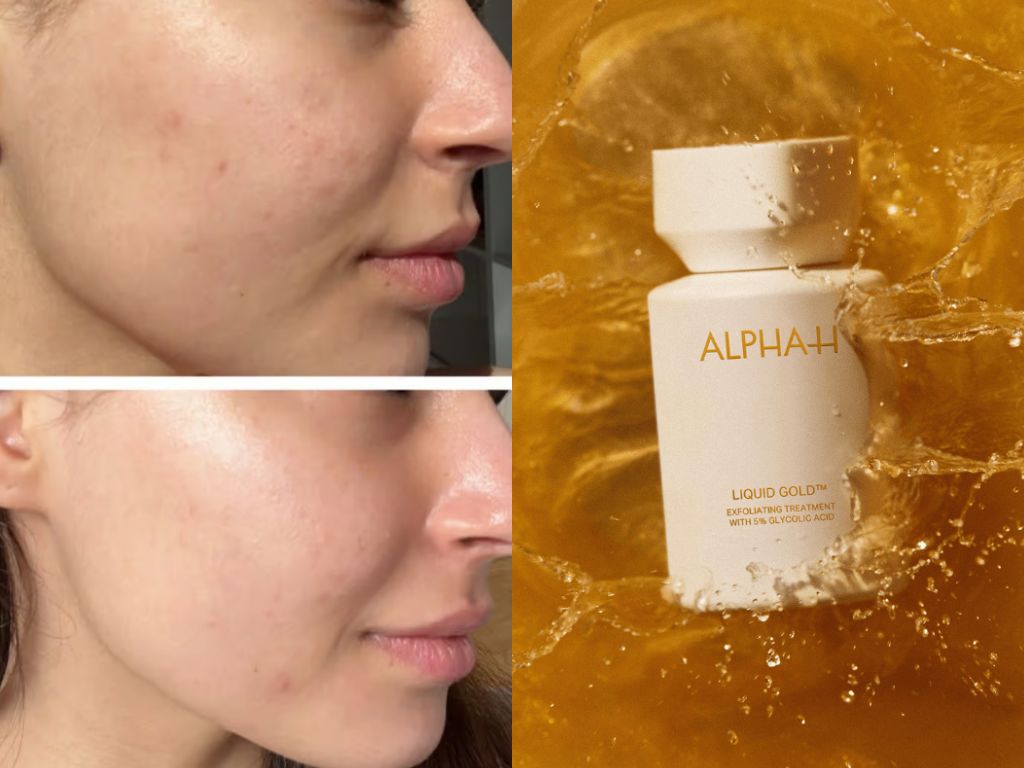
How Long Do AHAs Take to Work?
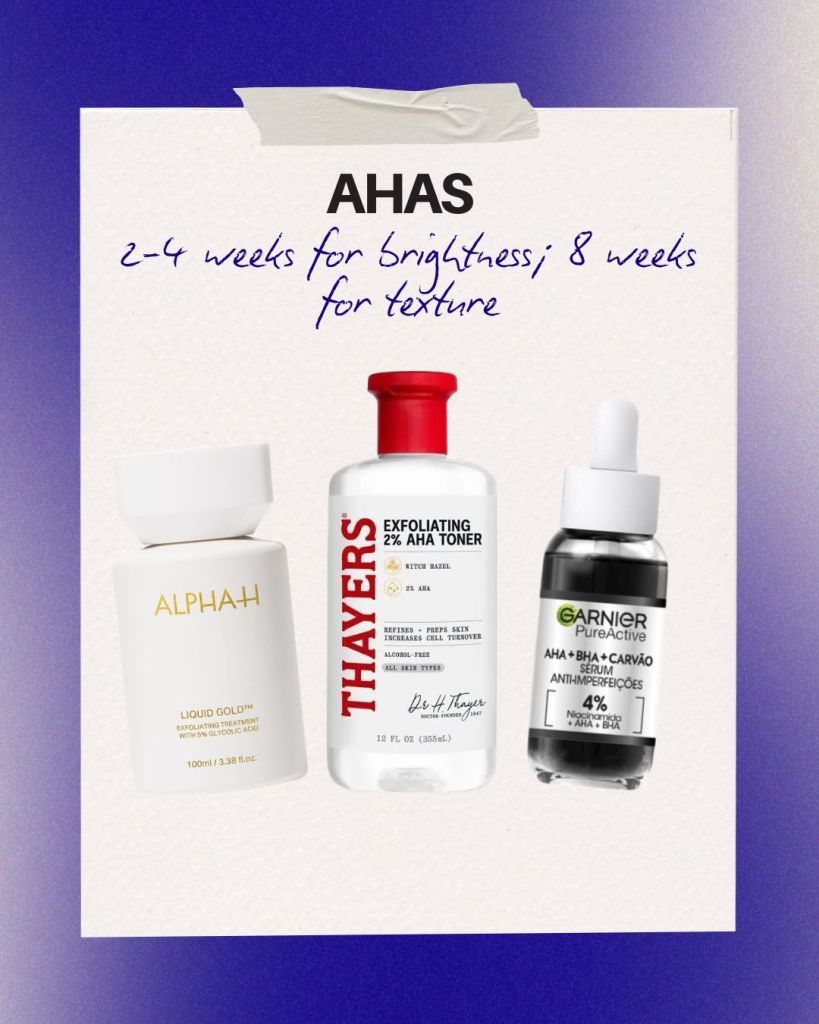
2-4 weeks for initial brightness and texture; 8 weeks for more significant change.
AHAs like glycolic and lactic acid exfoliate the skin surface by dissolving the bonds between dead cells. They’re particularly effective for dry, dull, or sun-damaged skin.
Most people notice a brighter, smoother complexion within a month of regular use. For more significant texture improvement or fading of surface-level pigmentation, eight weeks of consistent use is a realistic benchmark.
Quick Picks:
- Alpha-H Liquid Gold Exfoliating Treatment, $76.95
- Thayers Exfoliating 2% AHA Toner, $22.99
- Garnier Pure Active AHA + BHA Charcoal Serum, $36.99
How Long Does Salicylic Acid Take to Work?
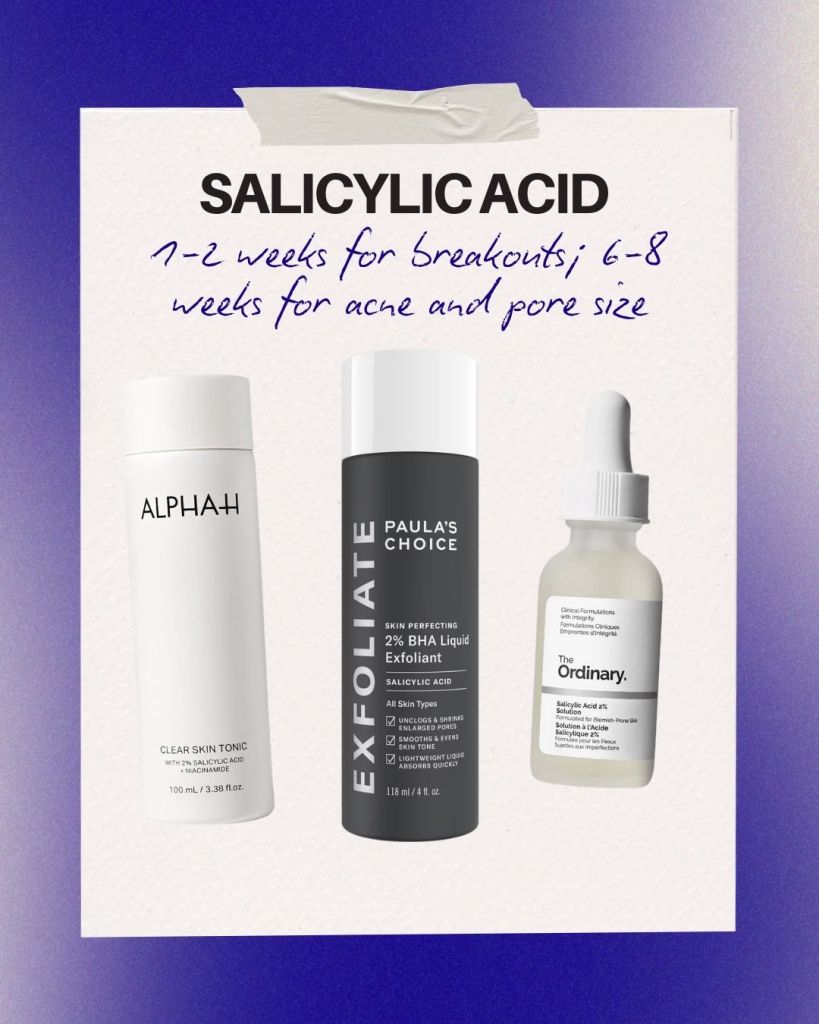
1-2 weeks for fewer breakouts; 6-8 weeks for noticeable improvement in acne and pore size.
Salicylic acid is a BHA that penetrates into pores to dissolve oil and debris, making it particularly effective for acne-prone and oily skin. Some people see a reduction in active breakouts within the first couple of weeks.
Read: Has Salicylic Acid Made Your Skin Worse? Here’s 4 Reasons Why And How to Get it Working For You
Longer-term improvements in congestion and pore appearance take more time – and patience through any initial purging period.
Quick Picks:
- Alpha-H Clear Skin Tonic, $44.95
- Paula’s Choice Skin Perfecting 2% BHA Liquid Exfoliant, $54.00
- The Ordinary Salicylic Acid 2% Solution, $10.70
How Long Does Niacinamide Take to Work?

2-4 weeks for redness and smoothness; 8 weeks for oil control and tone.
Niacinamide is one of the most versatile actives available – it regulates sebum, strengthens the skin barrier, reduces redness, and fades hyperpigmentation.
It’s also well-tolerated by most skin types, including sensitive skin. Early improvements in texture and redness are often noticeable within a month.
More significant changes in oil control and pigmentation take closer to two months of regular use.
Quick Picks:
- Naturium Niacinamide Serum 12% + Zinc 2%, $32.00
- Bondi Sands Begin Again Vitamin B3 Serum, $16.00
- SVR [B3] Ampoule Hydra, $69.00
- Simple 10% Niacinamide Booster Serum, $12.00
- Skinstitut 10% Niacinamide Power Serum, $69.00
How Long Does Azelaic Acid Take to Work?

4-6 weeks for redness and sensitivity; 8-12 weeks for pigmentation and acne scarring.
Azelaic acid is a gentle but effective multi-tasker – it targets pigmentation, reduces redness, and treats acne without the irritation that stronger actives can cause.
This makes it a particularly good option for sensitive skin, rosacea-prone skin, and those who’ve struggled to tolerate retinol or acids.
Results come gradually rather than dramatically, which can make it harder to track progress.
Early improvements in redness and skin comfort are usually noticeable within a month or two.
For more significant fading of post-inflammatory pigmentation or acne scarring, allow closer to three months of consistent use before assessing whether it’s working.
Quick Picks:
- The Ordinary Azelaic Acid Suspension 10%, $19.40
- Facetheory Blemicalm Azelaic Acid 10% Clarifying Serum, $40.00
- La Roche-Posay Effaclar A.Z. Gel-Cream, $65.95
- Azclear Medicated Lotion, $21.99
- Finacea Azelaic Acid 15% Gel, $28.95
How Long Does Hyaluronic Acid Take to Work?

Immediately for surface hydration; 1-2 weeks for sustained improvement.
Hyaluronic acid is a humectant – it draws moisture to the skin and creates an immediate plumping effect.
Unlike most actives, it delivers visible results quickly. That said, it doesn’t change skin structure or address deeper concerns; it simply maintains hydration and can help prevent dehydration.
Consistent use over one to two weeks helps improve overall skin elasticity and moisture retention.
Quick Picks:
- Bioderma Hydrabio Hyalu+ Serum, $71.99
- The Ordinary Hyaluronic Acid 2% + B5, $15.90
- L’Oréal Revitalift Filler Hyaluronic Acid Serum, $59.99
- CeraVe Hydrating Hyaluronic Acid Serum, $38.99
How Long Do Peptides Take to Work?
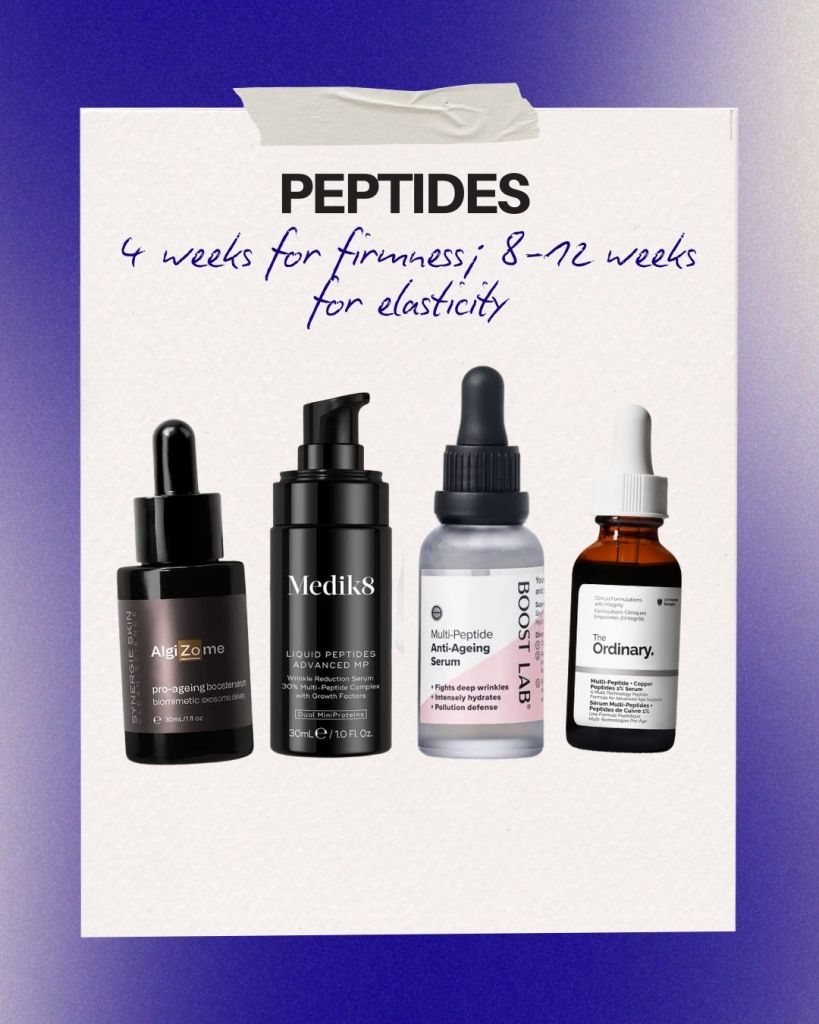
4 weeks for initial firmness; 8-12 weeks for elasticity and smoothness.
Peptides are amino acid chains that signal skin to produce more collagen, making them effective for firming and smoothing.
They’re slower-acting than some actives but tend to be well-tolerated, which makes them a good option for those with reactive skin. Give them at least three months before assessing whether they’re working.
Quick Picks:
- Synergie Skin Algizome Serum, $120.00
- Medik8 Liquid Peptides, $160.00
- Boost Lab Multi-Peptide Anti-Ageing Serum, $29.95
- The Ordinary Multi-Peptide + Copper Peptides 1% Serum, $54.10
How Long Does Eye Cream Take to Work?

4-8 weeks for hydration and puffiness; 12 weeks for fine lines and dark circles.
The skin around the eye area is thinner and more delicate than the rest of the face, which means it can be more responsive to hydrating ingredients quickly – but slower to show structural change.
Most eye creams targeting fine lines or dark circles need at least 12 weeks of consistent use before meaningful results are visible.
It’s worth noting common eye concerns can’t actually be addressed with eye creams – such as eye hollows caused by bone structure.
Quick Picks:
- Alkylo Organics Peptide Eye Serum, $64.00
- The Ordinary Multi-Peptide Eye Serum, $39.50
- Medik8 Crystal Retinal Ceramide Eye, $109.00
- Boost Lab Collagen Plump Eye Cream, $44.95
How to Get the Most Out of Your Skincare
Knowing how long ingredients take to work is one thing – giving them the best possible conditions to do it is another.
Use Sunscreen Every Single Day
This isn’t optional if you’re using actives. Vitamin C, retinol, AHAs, and BHAs all make skin more vulnerable to UV damage, and sun exposure actively undoes the results they’re working towards. A broad-spectrum SPF 30 or higher, applied every morning, protects your investment.
Apply Products in the Right Order
Thinnest to thickest – cleanser, toner, serum, moisturiser, SPF. Applying a heavy cream before a serum creates a barrier that prevents active ingredients from penetrating properly. Sequence matters more than most people realise.
Pay Attention When Your Skin Reacts
Some sensitivity in the first two to four weeks of a new active is normal. Persistent redness, stinging, or a compromised barrier is not – and pushing through it won’t speed up results.
If something consistently irritates your skin, scale back the frequency before you scale up the strength. This is also the point at which stopping early is the right call, not a failure.
Don’t Mix Actives That Work Against Each Other
Some combinations reduce efficacy or increase irritation – retinol and AHAs on the same night, for instance, or vitamin C layered directly with niacinamide in high concentrations. Alternating actives on different nights is often more effective than stacking them.
Use The Right Amount
More product doesn’t mean faster results. A pea-sized amount of retinol is sufficient for the whole face; excess product sits on the surface and increases the risk of irritation without improving outcomes.
Store Products Correctly
Vitamin C oxidises in heat and light. Retinol degrades with air exposure. Keep actives in a cool, dark place – and if your vitamin C serum has turned orange, it’s time to replace it.
Can Skincare Work Overnight?
Yes – but with caveats.
Some products do produce visible change overnight, particularly those targeting surface-level concerns.
Ingredients like salicylic acid and benzoyl peroxide can visibly reduce the size and redness of an active pimple within 24 hours by killing acne-causing bacteria and reducing inflammation. Overnight hydrating masks can leave skin looking plumper and more radiant by morning.
What overnight results can’t do is address deeper concerns – structural changes to skin, collagen production, or pigmentation all take weeks of consistent use. Fast results tend to be surface-level; lasting results require time.
How Do You Know If Your Skincare Routine Is Working?
This is a question worth sitting with, because the signs aren’t always obvious.
Early indicators that a product is working include: improved texture, less visible redness, skin that feels more comfortable and balanced throughout the day, and fewer breakouts (for those using acne-targeted ingredients).
Photography can be genuinely useful here – taking a photo at the start of a new routine and again at eight weeks often reveals changes that aren’t obvious in daily mirror-checking.
Signs a product might not be working: persistent irritation, new breakouts that don’t resolve, increased dryness or flaking after the initial adjustment period, or simply no change at all after 12 weeks of consistent use.
If you’re unsure, a skin professional can help you assess what’s actually happening with your barrier and routine.
How Long Does It Take for Skincare to Absorb?
Most serums absorb within 30-60 seconds to a few minutes. Heavier creams and oils take longer – up to five minutes in some cases.
As a general rule, applying products from thinnest to thickest consistency and giving each layer a brief moment to settle before the next helps maximise absorption.
There’s no need to wait 30 minutes between every step – that’s a myth that’s taken on a life of its own online. A minute or two between layers is generally sufficient.
How Long Should Skincare Stay on Your Face?
For most products – serums, moisturisers, and treatments – the answer is: all day, or overnight. These aren’t products you rinse off; they’re designed to absorb and remain on the skin.
The exception is wash-off treatments like exfoliating masks or clay masks, which typically have a recommended leave-on time of five to 20 minutes before rinsing. Always follow the product’s guidance here, particularly for higher-strength actives. As for serums specifically: a minute is usually enough before applying the next step.
Read: Should You Stop Retinol on Holiday? What to Know About Using Active Skincare While Travelling
Key Takeaways
- Most actives need at least eight weeks of consistent use before results are visible
- Hyaluronic acid is the exception – surface hydration is immediate
- Retinol, peptides, and eye creams are the slowest – allow 12 weeks minimum
- Purging, dryness, or flaking in the first two to four weeks is normal, not a reason to stop
- Exfoliating two to three times a week can speed up your skin cycle – but over-exfoliating will slow results
- Serums absorb within a few minutes; no need to wait 30 minutes between steps
- Taking photos at the start of a new routine is the most reliable way to track progress
- If nothing has changed after 12 weeks, see a skin professional before overhauling your routine
The Bottom Line
Skincare is a long game, and the timelines can feel genuinely discouraging when you’re three weeks into a new routine and your skin looks exactly the same.
The most common mistake people make is changing too much, too soon.
Pick your actives intentionally, give each product at least eight weeks, and resist the urge to add more when results feel slow.
Consistency, a supported skin barrier, and daily sunscreen will do more for your skin than any rotating roster of new products ever will.








Leave a Reply